From October 1, 2026, Spain will enforce sweeping traffic reforms. Motorcyclists, cyclists, and pedestrians will see new protections, while drivers face stricter rules at crossings and in congested traffic. Here’s what changes—and why it matters.
Drivers in Spain will soon have to adjust to a new set of road rules. The government’s overhaul of the Reglamento General de Circulación, coming into force on October 1, 2026, is meant to address the growing risks faced by pedestrians, cyclists, and motorcyclists. One of the most noticeable changes is the end of the flashing amber light at pedestrian crossings—a move aimed at clearing up a long-standing source of confusion and near-misses.
Until now, drivers could legally see a flashing amber while pedestrians still had a green light, leading to uncertainty and close calls at intersections. Under the new rules, this overlap is gone. Vehicles will now face a fixed red before any amber appears, so when pedestrians have a green, no car can legally move. The Ministry of the Interior describes this as a major shift in road safety, with the new rules putting those most at risk first.
Local authorities and traffic light operators across Spain will need to reprogram many intersections to comply with the new sequencing rules by October 2026.
The changes go beyond traffic lights. For the first time, Spanish law spells out who counts as a "vulnerable road user"—not just pedestrians and cyclists, but also users of personal mobility vehicles (VMPs) and all motorcyclists. This isn’t just a wording change. Police and road authorities now have to consider these groups in road design, signage, and enforcement. The law no longer treats all road users the same; it requires extra attention for those most exposed to harm.
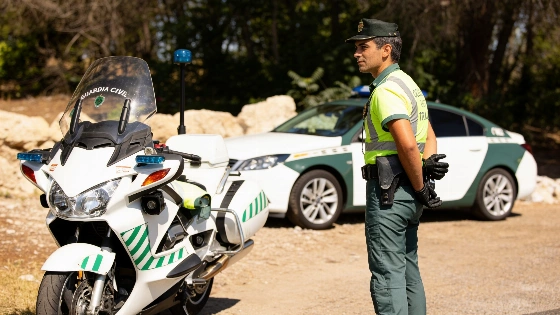
One of the most debated updates is the new rule allowing motorcycles to use the right-hand shoulder (arcén) during heavy traffic. This is not a blanket permission. Motorbikes can only use the arcén when congestion is severe, and even then, there are strict limits: a maximum speed of 30 km/h, single-file riding, and priority must be given to bicycles or vehicles stopped for emergencies. Some regions, such as Catalonia, have already said they will not apply this rule, showing the ongoing tension between national and regional policies.
The reform addresses a long-standing issue in Spanish traffic management, where the combination of flashing amber for vehicles and green for pedestrians at crossings led to confusion and increased accident risk. According to Diario Democrata, the new rules are part of a broader effort to give priority to vulnerable road users, including cyclists and users of personal mobility devices.
Other safety measures will also change daily driving. When passing a stopped vehicle, drivers must now leave at least 1.5 meters of space and slow down by at least 20 km/h below the posted limit in certain situations. These rules are meant to protect people dealing with breakdowns or working on the roadside, but they will also slow traffic and require drivers to pay closer attention.
Not all changes start right away. New lighting requirements for VMPs and mandatory certified helmets and gloves for motorcyclists are delayed until October 1, 2027, giving time for manufacturers and users to adapt. Meanwhile, rumors about a tougher driving test have been denied by the DGT: the exams stay the same for now, though risk perception videos may be added in the future.
These reforms come as Spain continues to rethink its approach to mobility and safety. Just as the government recently doubled diesel subsidies in response to rising fuel prices—see the reported earlier—the new traffic rules show a willingness to step in when public safety is at stake.
The era of car-first road policy in Spain is ending. The government’s decision to rewrite long-standing rules signals a new order on Spanish streets, one that puts the most vulnerable at the center. Whether these changes will actually reduce accidents remains to be seen, but the direction is clear: the rules, and the priorities, have changed.