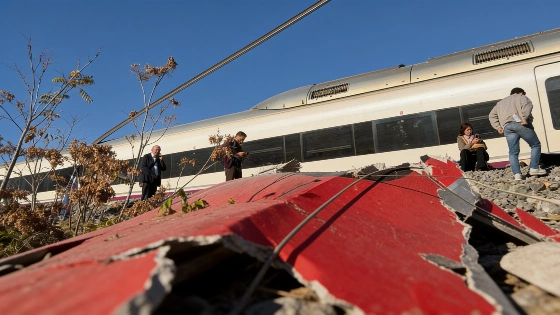
Two rail crashes in Spain have killed 109 people so far in 2026: 41 at Adamuz on January 18 and 68 initially reported at Urda in Toledo. The Urda toll later rose to 69 after rescue workers recovered human remains overnight and a victim died in hospital. Measured against passenger-kilometres travelled, the provisional rail fatality rate is higher than the car figure.
The estimate puts rail at about 2.5 deaths per billion passenger-kilometres, against roughly 1.5 for cars. It uses around 35–38 billion passenger-kilometres by train and about 400 billion by car. These rates are editorial calculations based on approximate travel totals, not an official Spanish transport-safety statistic.
That rail rate remains approximate. The two named crashes alone account for 109 deaths using the Urda toll reported initially, while the calculation uses a rounded toll of about 100, plus smaller accidents. The figures offer a snapshot, not a settled full-year rate.
The Urda collision occurred on October 28 near Urda station, on the Madrid-Seville high-speed line in Toledo. Initial reports put the crash at about 8:30 a.m. near kilometre marker 118: a Renfe train struck an Iryo train stopped on the track. The trains were carrying roughly 500 passengers, and two carriages reportedly went down an embankment. Adif, Spain’s railway infrastructure manager, is investigating what happened.
Early accounts described a control-centre instruction allowing the Renfe train to proceed while the Iryo train remained on the line. Investigators had not confirmed that sequence, which was reported as preliminary. Spain’s Transport Minister Óscar Puente called the crash “truly unbelievable.”
The road comparison uses about 600 car-user deaths a year. Spain records roughly 1,700 road deaths in total over 12 months, but the remainder involve people outside cars, including pedestrians and users of other vehicles. Using the overall road toll would misstate the risk for car occupants.
Passenger-kilometres account for how far people travel, making them more useful than raw death totals when comparing modes with very different volumes. Even so, this calculation compares a rail toll for 2026 to date with annual travel totals and the annual car death figure.
For a separate look at motoring costs, this RACE repair-cost estimate examines potential bills for compact cars. It measures repair expense, not road risk.
The figures challenge the usual view of rail as Spain's safest transport mode. The rail toll is an exceptional one-year result, and the source notes that a similar pattern could recur. The Urda crash was Spain’s second deadly high-speed rail collision of 2026, following the Adamuz disaster in Córdoba on January 18. It also revived comparisons with the 2013 Angrois derailment near Santiago de Compostela, which killed 80 people and injured 145.