Spain's TDT will change on 5 November 2026. Homes must rescan channels as UHD broadcasts expand and La Séptima enters the national television market.
On 5 November 2026, households affected by frequency changes will need to rescan their TDT receivers. La Séptima will join Spain's national free-to-air offer on the same date. RTVE says receivers compatible with DVB-T2 and UHD will also receive La 1 UHD, La 2 UHD and RNE Accesible. The change comes as Spain approaches the early election called by Pedro Sánchez for Sunday 29.
Spain's television services will transition gradually. Radiotelevisión Española, Atresmedia and Mediaset will begin UHD broadcasts through DVB-T2, while most channels remain in HD during the first stage. El Mundo says the plan will expand the terrestrial network's capacity without switching off the existing HD offer at once. Televisions without DVB-T2 support will continue to receive the current high-definition offer.
The transition will start gradually.
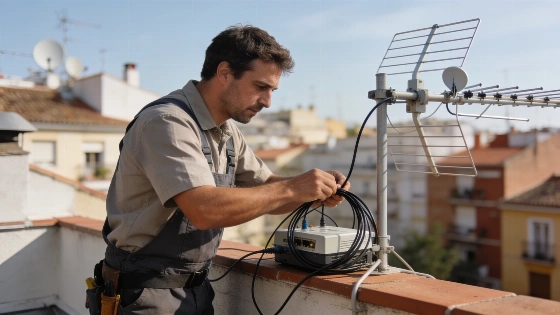
Viewers should rescan their television on 5 November. Audiovisual companies have had to inform users about the change since 5 October, ahead of the frequency reorganisation. The retuning requirement applies to households affected by the frequency changes. Access to the new UHD services depends on the receiver's technical support.
DVB-T2 creates room for the new channel. It uses the radio spectrum more efficiently, freeing capacity in one of the digital multiplexes used by TDT. La Séptima can use that space without removing most of the existing television offer.
Journalist Javier Ruiz will direct La Séptima. The channel plans to focus on live broadcasting and current affairs, with in-house production. Its stated target is the audience space occupied by Cuatro and laSexta. The launch will be gradual, with the operation not fully developed from day one. FormulaTV has also named Verónica Sanz, Alba Carrillo and Noor Ben Yessef among the project participants. The national licence was awarded on 26 May 2026 to Servicios Integrados Entretenimiento Televisivo SL, known as SIETE. El Confidencial Digital reports that the launch team is being built around 14 reporters with experience at TVE, La Sexta and Cadena SER, covering politics, courts, economics and crime reporting.
José Miguel Contreras, the channel's chief executive, said on 21 September that La Séptima would not begin with its complete schedule. He said the launch would use the resources and number of hours available at the time. Operations will start on that date, with a full programming grid still to come.
The channel is also running a national presentation campaign ahead of launch. La Séptima has announced a tour through several Spanish regions, following presentations at FesTVal de Vitoria and Foro Nueva Economía.
The election adds a political backdrop. The frequency shift and new channel will reach homes during Spain's pre-election period, a context also covered in earlier election coverage. The TDT operation itself is presented as a technological and spectrum-management measure.
The Ministry for Digital Change and the Civil Service says most European Union countries already use DVB-T2. The standard allows better picture and sound quality. The ministry also says it may improve Spanish broadcasters' ability to compete with satellite and internet television services that already distribute UHD content.
The process was set out in the National Technical Plan for Digital Terrestrial Television, approved in March 2025. Since the plan took effect, televisions sold in Spain have had to support TDT broadcasts in ultra-high definition. The rule applies to new equipment. Older compatible sets can continue receiving HD during the transition.
A second phase will begin once a sufficient share of digital television receivers has adapted. The plan then provides for UHD quality on national, regional and local channels. Until then, compatible televisions will receive the new UHD broadcasts, while other sets continue to show HD content.
Viewers may need to search for channels again. The change will not replace Spain's television system at once. The 5 November switch pairs a technical upgrade with spectrum redistribution, while opening a new national slot for La Séptima. For households, the basic step is the rescan. For broadcasters, DVB-T2 creates the capacity for a gradual move toward UHD across the TDT offer.