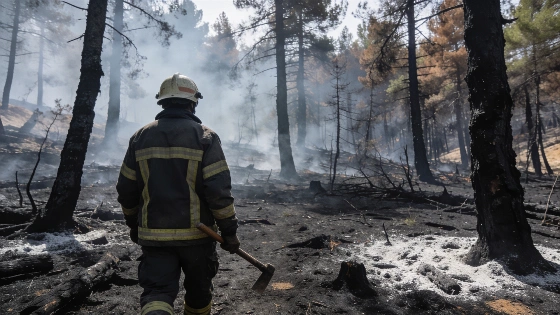
Despite record spending, Spain’s wildfire strategy prioritizes containment over true prevention. Most fires are still caused by human activity. Experts warn that current policies leave forests vulnerable and fail to address root causes.
Spain’s approach to wildfire management is under scrutiny as new data reveals that most resources are still directed at fighting fires rather than preventing them. In the Valencian Community, which has suffered some of the country’s most severe wildfires, authorities continue to label measures like 'cortafuegos' (firebreaks) and forest 'cleaning' as prevention, despite evidence that these actions do not stop fires from starting.
Analysis of official plans shows that over 90% of funds marked for prevention are actually spent on containment strategies—removing vegetation to slow or halt fires already in progress. These interventions, while sometimes necessary for protecting property or aiding firefighters, do not address the main cause of wildfires: human activity. According to long-term statistics, around 80% of forest fires in Spain are started by people, whether through negligence, accidents, or deliberate actions.
Experts argue that true prevention means stopping fires before they ignite, not just limiting their spread. However, current policies rarely target the root causes. For example, agricultural burning remains the leading cause of wildfires in many Valencian districts, yet regulations are weak and alternatives like shredding plant waste are not widely implemented. This approach could eliminate the risk, reduce accidents, and even provide economic benefits, but authorities have not prioritized it.
Instead, the focus remains on visible but expensive measures such as firebreaks, which often have significant environmental impacts and questionable effectiveness. There is little systematic evaluation of their cost-benefit ratio, and official data on their real impact is lacking. The situation is compared to road safety: investing in ambulances and hospitals is necessary, but it does not prevent accidents. Without strict enforcement, monitoring, and targeted interventions, the underlying problem persists.
Local prevention plans (PPIF) in Valencia dedicate less than 10% of their budgets to tackling the actual causes of fires. Most efforts are generic—public talks, posters, and recommendations—without clear, measurable objectives or rigorous follow-up. The lack of specific strategies for each municipality and cause means that progress is minimal. In five decades, the number of wildfires has barely changed, highlighting the failure of current prevention policies.
Environmental groups propose a different model: identifying the main causes in each area, setting concrete goals, and evaluating results annually. This would involve local commissions, stricter regulations, and alternatives to risky practices, all supported by scientific oversight and adequate funding. The aim is to progressively eliminate each known cause, adapting strategies to local conditions and learning from failures.
Contextually, Spain’s Mediterranean climate, rural depopulation, and changing land use patterns have increased the risk of large-scale wildfires. Climate change is expected to make extreme fire conditions more frequent, further exposing the weaknesses of a system that reacts rather than prevents. The European Union has called for member states to strengthen prevention, but implementation remains inconsistent across regions.
As the country faces another intense fire season, the debate over prevention versus containment is more urgent than ever. Without a shift in priorities and investment, experts warn that Spain will continue to face devastating wildfires, with mounting costs for communities, ecosystems, and the economy.