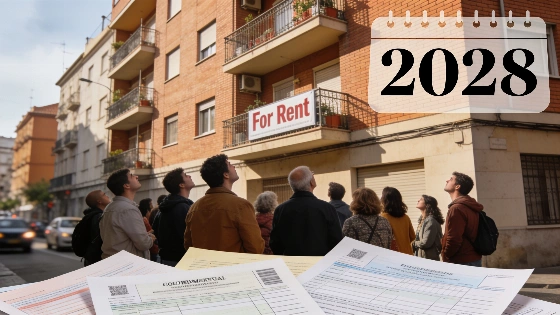
The Spanish government plans to extend rental contract protections until June 2028. Nearly four million tenants could benefit. The decree also targets tourist rentals and includes new measures for vulnerable families.
Spain’s coalition government is preparing a major extension of rental contract protections, with PSOE and Sumar reaching an agreement to prolong the right to extend leases until June 2028. The move, set to be included in a new housing decree, could affect nearly four million tenants and 1.5 million households, according to sources from Sumar. The draft is now entering negotiations with other parliamentary groups, as the government seeks enough support for its approval in Congress.
Under the proposed “reinforced extension,” tenants whose contracts expire up to June 30, 2028, will be able to request an extension. This measure expands the pool of potential beneficiaries by almost one million people compared to previous rules. The Council of Ministers is expected to approve the decree next Tuesday, but final details remain subject to talks with other parties in the lower house. The Socialist side of the government is maintaining discretion until the text is finalized.
The decree also introduces new regulations for seasonal and room rentals, aiming to curb the misuse of these contracts as a loophole to avoid standard rental rules and price caps in high-demand areas. In addition, the government plans to raise the VAT on tourist apartments to 21% and toughen penalties for advertising such properties on digital platforms. These steps are designed to discourage the growth of tourist rentals, which have been blamed for distorting the housing market in many Spanish cities.
Another key element, pushed by the Sumar group led by Yolanda Díaz, is a proposal to strengthen protections for families in vulnerable situations. The goal is to prevent evictions and ensure that no household is left without a housing alternative. This provision is still under negotiation with other parliamentary groups. Podemos has made these protections a condition for supporting the decree, while Junts remains opposed, having previously blocked a similar extension in April. Junts is demanding tax incentives for home purchases and landlords, as well as VAT exemptions for self-employed individuals—issues on which Sumar has not yet provided specifics.
Spain’s housing market has seen a series of regulatory changes in recent years, with the government seeking to balance tenant protections and market stability. The debate over rental rules comes amid broader fiscal planning, as highlighted when Catalonia’s government began work on its 2027 budget, setting new targets for public spending and economic growth. For more on regional fiscal strategies, see this overview of Catalonia’s budget process: Catalonia’s new budget planning for 2027.
Contextually, Spain’s rental sector has faced mounting pressure from rising demand, especially in urban centers and tourist hotspots. The government’s latest measures reflect ongoing efforts to address affordability, prevent speculative practices, and respond to social concerns about housing security. The outcome of parliamentary negotiations will determine how these changes are implemented and whether additional compromises are needed to secure majority backing in Congress.