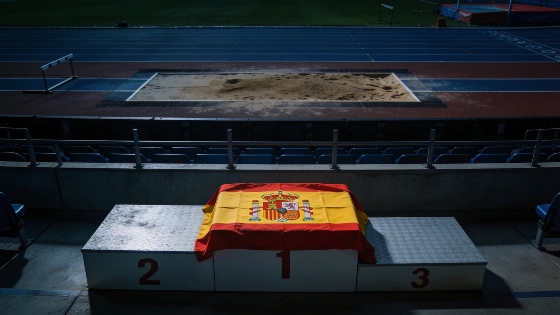
Spain will compete at the European Athletics Championships in Birmingham without its only reigning champions. Jordan Díaz is out due to ongoing issues, while Ana Peleteiro is on maternity leave after her second child. The team faces a challenging scenario.
Spain will head to the European Athletics Championships in Birmingham from August 10 to 16 without its two reigning champions, both in the triple jump. Jordan Díaz and Ana Peleteiro, who secured gold in Rome two years ago, will not be present. Díaz, the Cuban-born athlete, faces another lost season after plans to move to Arkansas fell through due to visa complications and other setbacks. Meanwhile, Peleteiro, who recently gave birth to her second child, León, is focusing on her recovery and future competitions.
The absence of these two athletes marks a significant blow for Spain’s medal prospects. Jordan Díaz, despite holding an Olympic Scholarship A for his gold in Paris 2024, has seen his financial support decrease as he misses out on performance incentives. His situation is further complicated by the uncertainty surrounding his training base and eligibility for future events. Ana Peleteiro, at 30, is determined to return to elite competition after her second maternity, drawing inspiration from athletes like Nia Ali and Allyson Felix, who achieved world titles after giving birth.
Peleteiro has already begun light training just 13 days after her delivery, aiming to compete at the European Indoor Championships in Valencia in March 2027—only eight months after her second child. She acknowledges the challenge but remains motivated, with her husband and coach Benjamin Compoaré planning her comeback. The Spanish triple jump scene, especially among women, is struggling in her absence. The best national mark this year belongs to 18-year-old Ana Estrella de León with 13.49 meters, ranking only 63rd in Europe, followed by Elda Romeva at 13.37 meters.
On the European stage, the event is dominated by athletes like Diana Maria Ion of Romania and Thea Lafond from Dominica, with marks well beyond the current Spanish leaders. The global elite includes Cuban and Caribbean jumpers, as well as the injured world record holder Yulimar Rojas from Venezuela. Peleteiro, who won bronze at Tokyo 2020, is already looking ahead to the Los Angeles 2028 and even the Brisbane 2032 Olympics, citing her relatively preserved body after two maternity breaks as a potential advantage for longevity in the sport.
Spain’s situation at the upcoming championships highlights the broader challenges facing its athletics program, particularly in technical events. The lack of top-tier performers in the triple jump is evident, and the gap to the European and world leaders is growing. This comes at a time when international sporting tensions are also making headlines, as seen in the recent diplomatic dispute between Spain and France ahead of the World Cup semifinal. For Spanish athletics, the focus now shifts to nurturing new talent and supporting returning champions like Peleteiro as they aim for future success.
For context, the European Athletics Championships are a major biennial event, drawing top athletes from across the continent. Spain has historically relied on a handful of standout performers for medals, making the absence of Díaz and Peleteiro particularly impactful. Their situations also reflect broader trends in elite sport, where maternity and administrative hurdles can shape careers as much as competition results. The coming months will be crucial for Spain’s athletics federation as it seeks to rebuild its competitive edge and support athletes through transitions both on and off the track.