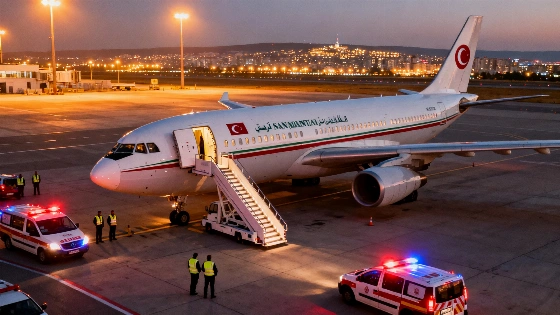
A310 with Pedro Sánchez: Emergency Landing in Ankara and an Unexpected Turn for the Government Fleet. The government Airbus A310 carrying Pedro Sánchez made an emergency landing in Ankara due to a technical malfunction. The incident did not compromise safety, but once again highlighted the age and condition of Spain’s flagship aircraft.
The emergency landing of a government Airbus A310 carrying Spanish Prime Minister Pedro Sánchez at Ankara Airport has once again brought to the forefront questions about the technical condition and relevance of the aircraft fleet serving the nation’s top officials. According to TRT Haber, the incident occurred during a flight from Madrid to Yerevan: the crew was forced to interrupt the route due to a detected technical malfunction. Although the problem was not deemed serious, the situation required the Prime Minister to make an unscheduled overnight stay in the Turkish capital and temporarily halt the mission.
Technical episode and its consequences
The Airbus A310 used for the Prime Minister’s official trips is one of the oldest aircraft in Spain’s government fleet. Although, according to TRT Haber, the malfunction did not pose a threat to passengers, the very fact of the emergency landing highlights the vulnerabilities of operating such airliners on long-haul routes. As European governments are increasingly renewing their aviation fleets, such incidents prompt a discussion about the need to modernize and improve the reliability of equipment serving the country’s top leaders.
The role of the A310 in the Spanish government fleet
The Airbus A310 is a wide-body aircraft that for decades has remained the workhorse for long-haul flights of Spain’s official delegations. Despite their age, these planes continue to handle key tasks, including intercontinental flights and participation in international summits. However, each technical incident of this kind increases pressure on the authorities to reconsider their fleet renewal strategy, especially amid rising safety and comfort standards in the government transportation sector.
Context for Spain and the European market
Spain’s experience operating the Airbus A310 is typical of several European countries, where such aircraft remain in service thanks to their proven design and suitability for specific government purposes. However, as Germany, France, and other EU nations accelerate fleet modernization, Spain faces a dilemma: continue using reliable but aging aircraft or invest in new models that meet today’s standards of efficiency, environmental friendliness, and technical reliability. The incident involving Pedro Sánchez in Ankara may serve as an additional argument in favor of updating the fleet, especially given the rising intensity of international travel and the need to maintain a high national image on the global stage.
For reference: The Airbus A310 has not been produced since the mid-2000s, and in the Spanish market these aircraft are found exclusively within government and military organizations. In the civilian sector, they were long ago replaced by more modern Airbus and Boeing models. For government needs, selecting a new platform is becoming increasingly relevant, given the requirements for range, safety, and official status.