Spain’s automotive industry is eyeing defense as Europe ramps up military spending. But transforming car plants into arms suppliers is far from straightforward, with certification, scale, and security hurdles slowing the shift.
Seat and Indra made headlines when talk began of building up to 5,000 light military vehicles at Martorell. The plan would use a plant that can turn out 600,000 cars a year. On paper, it looks like a fast track for Spain to join Europe’s rearmament push. The reality is much messier.
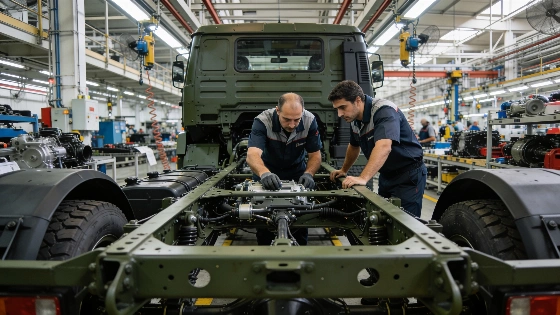
Car factories bring size, tech, and skilled workers. But switching from cars to military gear is a different game. Defense work needs strict certification, tight security, and custom builds. Carmakers are used to churning out huge numbers of identical vehicles. Defense contracts often mean small batches, long timelines, and every part tracked. Spanish sources say the Martorell project is still in its early days. Whether it makes sense financially depends on how many vehicles get ordered. This slow, complex shift matches what’s happening across Europe, where turning car plants into arms factories is never simple.
Indra has announced plans to triple its industrial footprint in Spain to over 140,000 square meters, including new military vehicle facilities in As Pontes (A Coruña) and Gijón.
Europe wants to raise up to 800 billion euros for defense by 2030. That puts pressure on governments and industry to find new ways to build more. Spain is raising its own defense spending. But finding empty factories is not enough. The real test is figuring out which civilian tech can be reused, which skills matter most, and how much public money is needed to help new suppliers break in. The European Commission’s Readiness 2030 and ReArm Europe plans, plus SAFE’s 150 billion euros for joint buying and production, are pushing this change.
Most carmakers know they can’t just flip a switch and start making military vehicles. The best shot is to move proven tech—like batteries, electrification, advanced materials, modular platforms, precision machining, electronics, and software—into defense. Carmakers’ know-how in sensors, cameras, lidars, and fleet management is already being eyed for unmanned ground vehicles and autonomous logistics. Sector experts told Eleconomista that tech transfer, not tank-building, is where the real action is.
But a sensor or battery that works in a family car won’t survive a war zone without changes. Military vehicles face hard knocks, wild temperatures, dust, shocks, electromagnetic attacks, and hacking. Every part needs special testing and paperwork. That drives up costs and slows down companies new to defense contracts.
European defense agencies report persistent shortages in air and missile defense, long-range weaponry, munitions, drones, and military mobility, which is fueling interest in expanding the continent's industrial base for defense.
That’s why teamwork matters. The Hub Defensa-Automoción de Sernauto was set up to connect car suppliers with defense firms and public agencies. The goal is to spot tech that works for both sectors and build partnerships. It’s not just about making more. It’s about sharing know-how on rules, certification, and how to get into defense programs.
Component makers may have an easier time getting in. Ficosa, for example, is working with Indra to develop electro-optical vision and surveillance systems for armored vehicles. They use their experience with car cameras and driver-assist tech. These systems are headed for the VCR 8x8 Dragón and the Vehículo de Apoyo de Cadenas. It’s a clear case of dual-use tech letting specialists join the defense supply chain without having to design or build whole military vehicles.
But there are limits. The easiest fit is in non-lethal, dual-use areas—mobility, logistics, sensors, communications, cybersecurity, and autonomous systems. When it comes to ammo, weapons, or attack drones, the barriers shoot up. European firms usually stick to transport and support tech. They worry about the business, labor, and image risks of turning civilian plants to military use.
Spain faces a steeper climb than Germany. Germany has more factory space and a bigger defense market. Spanish industry relies more on big contractors who want to add outside skills. That makes it vital for public officials to do more than just connect companies. They need to set clear needs, fund test projects, speed up certification, and put industrial strength ahead of price in contracts. Reports from The Objective say this is as much about industrial policy as defense. Spain’s authorities and firms want to weave civilian supply chains into defense and protect key tech.
As reported earlier, Spain’s car sector knows how to adapt to new tech. But defense is a different story. Europe has shown that conversion can work—Renault’s deal with Thales for remote ammo and Volkswagen’s Osnabrück plans prove it. But profits are never a sure thing. Success needs steady demand, dual-use innovation, and firm contracts for companies willing to invest in new skills.
Spain’s factories are at a turning point. The defense chance is real. But only for those who can handle military rules, certification, and long-term bets. Without strong public support and a focus on stable markets, the dream of turning car plants into defense engines could stall before it starts.