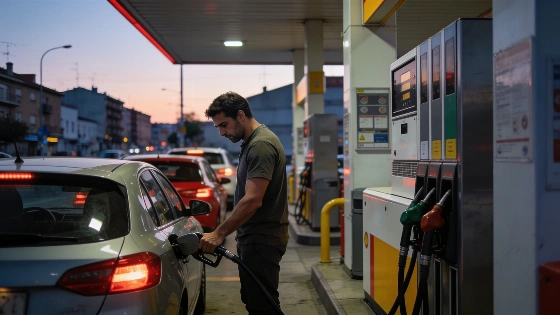
Spanish drivers are about to see fuel prices rise as government tax cuts end on September 30. With oil prices already unstable, filling up could get much more expensive in October, forcing many to decide whether to refuel now or risk paying more later.
On October 1, Spanish drivers will feel the hit at the pump. The government’s special tax cuts on fuel are about to run out. For months, these breaks kept petrol and diesel prices lower. Now, with the end in sight, the cost of filling up is set to rise just as oil markets stay shaky.
Anyone planning to refuel is getting the same advice from industry insiders: fill up before September ends. The Real Decreto-ley 18/2026, passed this summer, cut the Impuesto sobre Hidrocarburos for the most-used fuels. The cuts rolled out in July, August, and September, but all of them end on September 30. After that, the old, higher tax rates come back.
In September, the tax cut for diesel in Spain was increased to 20 cents per litre, a deeper reduction than in previous months, while petrol received a 5 cent cut.
September was different for diesel drivers. As prices moved up and down, the government gave a bigger tax break on gasóleo—up to 20 cents off per litre. Petrol drivers got a smaller cut, but both groups saw a rare bit of relief. That’s about to end.
But taxes aren’t the only thing drivers have to watch. Oil prices around the world have been jumping, and distribution costs add more uncertainty. Not every petrol station will raise prices the same way or at the same time. Still, losing the tax break means drivers lose a key cushion that has helped keep prices down in recent weeks.
With the tax support gone, what drivers pay at the pump will depend on oil prices and how each station sets its rates. One thing is clear: the buffer is gone. Spanish drivers are back to facing the full weight of global energy costs.
According to the IRU, there is no automatic extension mechanism for Spain's reduced fuel tax rates: unless the government enacts a new measure, the standard tax regime resumes from October 1. This is particularly significant for the transport sector and professional diesel users, who will lose both the reduced rate and the refund scheme.
This change comes as drivers across Europe deal with rising costs and new rules. In Madrid, for example, new car regulations have already made owning a vehicle more expensive, as recent coverage shows.
With the government’s special measures ending, Spanish drivers now face a market shaped by unstable oil prices and higher taxes. The timing is tough for those already struggling with other economic pressures. The message is simple: when temporary help ends, the market takes over—and for drivers, that means more uncertainty every time they fill up.