Spanish pensioners living abroad now have to prove they are alive every September or risk having their payments suspended. The VIVESS app offers a digital way to do this, but missing the deadline could mean a sudden loss of income.
For Spanish retirees living outside the country, missing a single deadline this September could mean their pension payments stop without warning. Social Security authorities have set a firm cutoff: if proof of life is not submitted by September 30, 2026, payments will be suspended. There are no exceptions or extensions. This rule applies to pensioners who receive payments through the INSS or the Instituto Social de la Marina and live outside Spain. The September window is the last chance to comply for 2026.
Unlike pensioners living in Spain, those abroad now have to complete two proof-of-life checks each year. The first round ran from January to March. The second, in September, is mandatory for continued payments. Several Spanish and Portuguese news outlets have reported that missing this second window has already caused problems for many pensioners abroad.
In 2026, Spanish pensioners abroad must complete two mandatory proof-of-life checks: the first in January–March, and the second and final one from September 1 to 30.
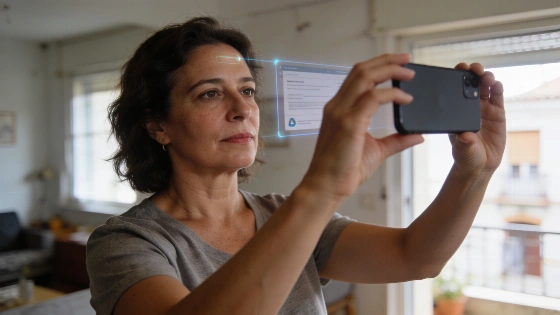
The main tool for this process is VIVESS, a government-backed mobile app that uses facial recognition to confirm a pensioner's identity. Available for Android and Apple devices, VIVESS lets users complete the process remotely, without visiting a consulate or office. Pensioners log in with Cl@ve, DNI, NIE, or their pension file number, then upload photos of their ID and do a live facial scan. If successful, the app generates a receipt, which should be kept until official confirmation arrives from the INSS or ISM. The process is meant to be secure and straightforward, according to official guidelines and sources like AyudaTramites and MSN Spain.
For those who cannot or do not want to use VIVESS, there are two other options. Pensioners can get a certificate from the local Civil Registry at the Spanish consulate, or submit documents from the relevant authority in their country of residence, if there is an international agreement. A third, less common option is to appear in person at the nearest Spanish Labour, Migration, and Social Security office. In all cases, pensioners should keep copies of every document and proof of submission. The best method may depend on the country of residence and whether a bilateral agreement exists, according to AyudaTramites and other official sources.
Spanish and Portuguese press emphasize that pensioners abroad should pay close attention to notifications from their local authorities, as some countries may have different deadlines or submission channels for proof of life. It is recommended to always verify with the official Seguridad Social or consular websites whether a paper document must be sent to Spain.
These checks are only to confirm that the pensioner is alive and still entitled to payments. They are separate from fiscal residency certification, which has not changed. Starting in 2027, the rules will get even stricter: proof of life will be required three times a year—in January, May, and September. Missing any deadline will result in suspended payments until the situation is resolved, so timely action is essential.
This policy does not affect pensioners living in Spain or all types of benefits. Only those managed by the INSS and Instituto Social de la Marina are included. Spouses who receive a minimum supplement will also be able to use VIVESS for their own verification starting in 2026. According to Seguridad Social, these measures are part of a broader effort to protect the integrity of the pension system for people living abroad.
Recently, the Spanish Supreme Court issued a decision on pension rights, as reported earlier, reflecting ongoing changes in social security rules for those with ties to Spain but living elsewhere.
In practice, the responsibility now falls on the pensioner to prove their status, with technology making the process both easier and more demanding. Authorities have made it clear: digital compliance is now standard, and missing a deadline can directly threaten financial security. For Spanish retirees abroad, following these new rules is the only way to keep their pensions coming.