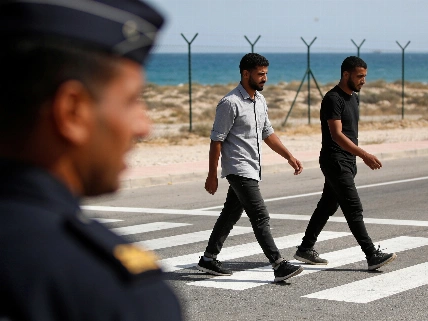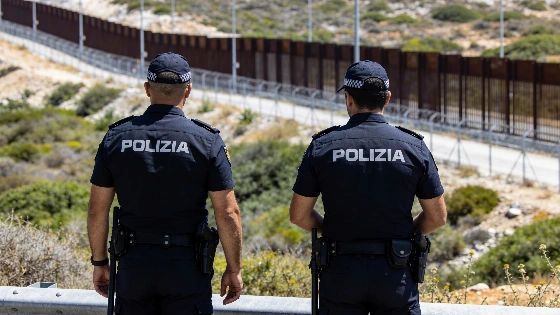
Spanish police unions have rejected allegations of abuse against migrants in Ceuta. The claims, made by a Moroccan rights council, have sparked a demand for concrete evidence. The dispute highlights ongoing tensions at the border.
Spanish police unions have forcefully rejected accusations of mistreatment against migrants in Ceuta, following a report by the Consejo Nacional de Derechos Humanos de Marruecos (CNDH). The Sindicato Unificado de Policía (SUP) issued a statement denying any widespread misconduct by Spanish officers and insisted that such serious allegations must be supported by clear evidence. The union emphasized that any specific complaint should be thoroughly investigated, but warned against generalizing suspicion over the entire police force without substantiated proof.
The controversy erupted after the CNDH, an official Moroccan human rights body, published findings based on testimonies from individuals returned to Morocco. According to the report, several migrants described consistent accounts of abuse and aggression by Spanish security forces, particularly in areas not covered by surveillance cameras. The CNDH, which advises the Moroccan government and is led by a president appointed by King Mohamed VI, has previously criticized Spanish authorities, including in a 2022 report that attributed responsibility for deaths during the Melilla border incident to Spanish police, despite the events occurring on Moroccan soil.
SUP responded by highlighting the complexity of the situation at the Ceuta border, noting that the presence of injuries alone does not clarify who caused them or under what circumstances. The union pointed out that the CNDH report itself describes a chaotic environment marked by violent clashes, stone-throwing, exhaustion, and injuries during attempts to cross the border, often by swimming. SUP called for any accusations to be individualized and backed by objective evidence specifying what happened, where, when, and who was involved.
The union also drew attention to the operational pressures faced by police in Ceuta, stating that officers had to manage an extraordinary situation with limited resources—a concern SUP had previously raised. Additionally, the union questioned the actions of Moroccan authorities, referencing the CNDH's own admission that the surge in attempted crossings at El Tarajal was anticipated weeks in advance. The report noted that the council had monitored 23 Facebook groups with over a million members, where calls to approach the border were circulated.
SUP argued that any assessment of the crisis must consider not only the response of Spanish police once the border was overwhelmed, but also the factors on the Moroccan side that allowed the situation to escalate. This perspective echoes broader concerns about coordination and preparedness on both sides of the border. The ongoing debate comes as Spanish authorities continue to address the challenges posed by large numbers of migrants arriving in Ceuta. For example, recent efforts have focused on reuniting unaccompanied minors with their families, as detailed in a report on Spain's response to the Ceuta migrant crisis.
Ceuta remains a focal point for migration between Africa and Europe, with its border frequently under pressure from mass crossings. The city’s unique status as a Spanish enclave in North Africa makes it a flashpoint for diplomatic and operational challenges. Spanish police unions continue to call for increased resources and clearer protocols to manage such incidents, while human rights organizations on both sides of the border maintain scrutiny over law enforcement practices. The dispute over the latest CNDH report underscores the persistent tensions and the need for transparent, evidence-based investigations into any alleged abuses.