A 17-year-old was detained in Gipuzkoa as the suspected head of the extremist group 764 in Spain. Authorities link him to death threats against Irene Montero and Sarah Santaolalla. The case highlights growing concerns over online radicalization.
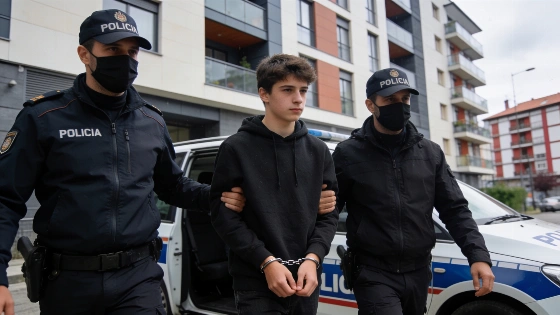
Spanish police have arrested a 17-year-old in Gipuzkoa, identifying him as the suspected leader of the extremist group 764 in Spain. The operation, carried out jointly by the Guardia Civil, Mossos d’Esquadra, and Ertzaintza, followed a series of death threats sent earlier this year to public figures, including Podemos MEP Irene Montero and commentator Sarah Santaolalla. According to sources cited by EL PAÍS, the teenager is believed to have orchestrated a campaign of intimidation and violent threats targeting a range of individuals and institutions.
Investigators describe 764 as a virtual, transnational network with origins in the United States in 2021. The group is characterized by neo-Nazi, satanic, and pedophile elements, and is known for promoting violence and societal collapse. Spanish authorities consider the detained minor the main figure of 764 in the country, with evidence linking him to numerous threats against schools, local governments, libraries, social organizations, and leisure centers between January and April 2026. These threats, which included warnings of shootings and armed attacks, did not materialize but triggered significant public alarm and required extraordinary security measures.
Police reports indicate that the suspect also engaged in doxing and swatting against individuals in the Basque Country and Catalonia. Doxing involves collecting and publishing personal data to facilitate harassment or extortion, while swatting refers to making false emergency calls to provoke a police response at a victim’s address. The investigation revealed that the minor participated in online chats and gaming platforms, where he manipulated vulnerable youths into extreme acts of humiliation, such as 'blood walls'—where victims mark their skin with blood or excrement—and 'cutsigns', which involve self-inflicted cuts. These acts were documented and shared within the group to demonstrate control and gain status.
During searches of two properties linked to the suspect in Gipuzkoa, authorities seized electronic devices, digital storage, and documents related to 764, including handwritten notes with Nazi and satanic symbols. Europol’s latest report on terrorism trends in the EU highlights the danger posed by 764 and similar groups under the umbrella of The Com, noting their focus on destabilizing social structures and targeting minors for recruitment and abuse. The report emphasizes that these groups lack a coherent ideology, instead uniting around violence, nihilism, misogyny, and elements of both far-right and jihadist extremism.
Following his arrest on July 16, a San Sebastián court ordered the minor’s preventive detention in a juvenile facility. Police note that the suspect is also linked to a wave of threats sent to various public and private entities, which, while never carried out, forced authorities to deploy additional security resources. The group’s communications often referenced plans to broadcast violent acts live online for other members to witness.
Spanish authorities have prioritized the threat from 764 and similar networks, aligning with the National Counter-Terrorism Strategy. Police in other countries have also launched investigations into 764’s activities, which include sextortion, organized harassment, distribution of child exploitation material, incitement to self-harm, and campaigns of intimidation against institutions and individuals. In December, Canada officially designated 764 as a terrorist organization.
Extremist groups like 764 primarily use social media, gaming platforms, and messaging apps to access and recruit minors, often starting with seemingly harmless content tailored to youth culture. Once contact is established, young people are drawn into private groups where more intense manipulation and radicalization occur. Victims may be coerced into producing abusive material, self-harming, or participating in violent acts. The Spanish-led European operation recently identified over 4,300 online links hosting violent propaganda from 764 and related groups.
Contextually, the rise of online extremist networks targeting minors has become a growing concern across Europe. Spanish law enforcement agencies have increased monitoring of digital platforms and are working with international partners to disrupt recruitment and prevent the spread of violent content. The case underscores the evolving nature of radicalization and the challenges authorities face in addressing threats that originate and operate largely in the digital sphere.