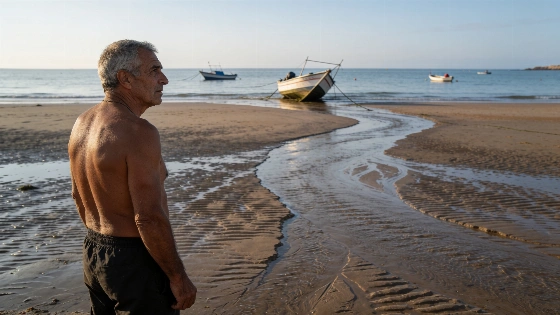
A sharp change in atmospheric pressure triggered a rare meteotsunami on the Valencian coast. Beaches in Xàbia and Gandía saw the sea recede and surge within minutes. Authorities tracked the event and confirmed its cause.
Unusual sea level fluctuations startled residents and visitors along the Valencian coast on Thursday morning, as the Agencia Estatal de Meteorología (Aemet) confirmed a rare meteotsunami event. The phenomenon, also known as “rissaga,” caused the sea to retreat abruptly and then surge back at beaches in Xàbia and other coastal areas, disrupting the usual calm of the shoreline.
According to Aemet, the incident was triggered by atmospheric gravity waves that led to rapid changes in surface air pressure. In Xàbia, pressure oscillations reached up to four hectopascals, with the most pronounced instability recorded between 10:10 and 10:20. These abrupt shifts altered the weight of the atmosphere pressing down on the sea, producing what meteorologists call an “inverted barometer effect.” As a result, the water level responded in the opposite direction to the pressure change, a dynamic precisely tracked by the Puertos del Estado tide gauge network.
In the port of Gandía, the impact was especially clear: water levels dropped by 70 centimeters in just five minutes, plunging from a peak of +0.336 meters at 09:06 to -0.371 meters at 09:12. Aemet explained that for such a meteotsunami to occur, the atmospheric wave must resonate with the sea, efficiently transferring energy and causing the dramatic water movements observed in harbors and on beaches. This mechanism closely resembles the “rissagas” that periodically affect the port of Ciutadella in Menorca.
Events of this kind are not unprecedented for the Valencian coastline. On 23 July 2017, several towns including Torrevieja, Elche, Santa Pola, and El Campello experienced sudden sea surges, which were officially classified as a “rare maritime phenomenon” in the Sinobas notification system. The latest episode highlights the region’s vulnerability to atmospheric disturbances, even outside of storm season. For context, similar weather-driven disruptions have affected other parts of Spain, as seen when a recent storm system brought heavy rainfall and temperature drops across the country.
Meteotsunamis differ from seismic tsunamis in that they are caused by rapid atmospheric pressure changes rather than underwater earthquakes. While typically less destructive, they can still pose risks to coastal infrastructure and beachgoers. The phenomenon is most likely to occur in enclosed or semi-enclosed bays, where resonance can amplify the effect. Spanish authorities continue to monitor these events, using tide gauges and atmospheric sensors to provide early warnings when possible. Understanding the triggers and patterns of meteotsunamis is increasingly important for coastal management, especially as climate variability may influence the frequency and intensity of such occurrences in the Mediterranean.