El Niño may bring its deadliest heat in decades. Spain could record 480 additional deaths, with Madrid, Andalusia and Catalonia facing the greatest risk.
El Niño could be linked to 451000 additional deaths from extreme heat between June 2026 and February 2027, according to the Climate Impact Lab at the University of Chicago. Spain alone could see around 480 additional deaths between September and February. Independent reports do not separately confirm that Spain-specific figure as an established external fact. Madrid, Andalusia and Catalonia are expected to face the heaviest impact because they are among the country's most populated regions.
The projected toll would put this year's phenomenon in a category of its own. Scientists say El Niño in 2026 could become the strongest ever recorded. The report describes its temperatures as astonishing and reaching Godzilla-level intensity. It also presents the event as a warning of what climate change could bring within 20 years. BBC and the UK Met Office report that the developing event has exceeded previous temperature benchmarks in the central-eastern equatorial Pacific, including the earlier peak recorded in 2015.
The Climate Impact Lab report projects a 44% increase in the number of extremely hot days compared with typical years, helping explain the sharp rise in the expected heat-related death toll.
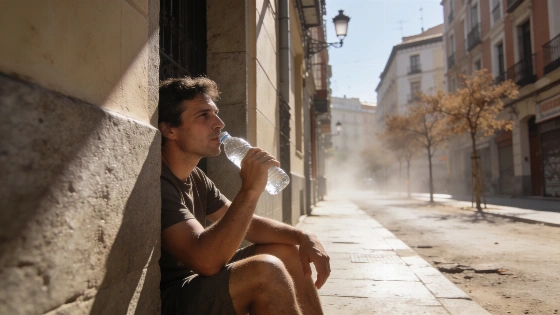
For Spain, the immediate risk is concentrated in the coming months rather than spread evenly across the winter. Emily Grover-Kopec of the Climate Impact Lab says most of the country's additional heat deaths are expected in the current month. The estimate covers deaths attributable to the phenomenon itself. It does not include the separate effects of droughts, wildfires or floods. The broader assessment also identifies heat waves as the main source of the projected mortality. It warns that El Niño can disrupt food supplies and water availability.
Spain already faces repeated climate-related risks. An earlier health report showed how quickly a separate medical risk can become concentrated in Spanish hospitals. The El Niño estimate points to a nationwide danger driven by temperature.
Michael Greenstone, co-founder of the Climate Impact Lab, says researchers can now estimate how heat affects crops and its worst possible human consequence. He says the projected 451000 deaths represent individual lives, not an abstract statistic. The report identifies the regions expected to suffer the greatest losses so emergency measures can reach the places where they could save the most people. Reuters and the Associated Press separately reported the main findings. They also reported that the figure represents additional heat deaths, not the total number of deaths from all causes.
About 239000 of the projected additional heat deaths are expected within the nearest six-month period. The wider assessment covers June 2026 through February 2027 and is intended to help identify regions where emergency measures could have the greatest effect.
El Niño begins with warming in the equatorial Pacific. It then disrupts weather patterns around the world. The Pacific has reportedly recorded a water temperature increase of 3.05°C. That exceeds the 3.02°C measured at the end of November 2015, the highest figure recorded in the previous 150 years. The Met Office says the new peak is therefore higher than the previous modern benchmark, rather than a simple repeat of the 2015 event.
The burden is expected to fall most heavily on poorer regions. Nigeria, Indonesia, Sudan, India, Brazil, the Democratic Republic of the Congo, Niger and Chad are listed among the countries that could record the largest numbers of deaths. The United States also appears among the 20 most affected nations, with a projection of 3500 additional heat deaths.
The Climate Impact Lab says mortality must become a central part of El Niño preparation alongside efforts to protect food security. Tamma Carleton, a co-author of the report, says emergency responses and targeted planning could save many lives now. She also warns that temporary emergency action cannot become the permanent answer to temperatures that may be normal in 20 years.
The figures are forecasts, not a final death count. Their practical message is direct. Authorities have a map of the regions where intervention could matter most and a short period in which to use it. Spain's projected losses are concentrated in Madrid, Andalusia and Catalonia. The response should focus on those populations first rather than treat the threat as a distant global statistic. El Niño is therefore more than another seasonal weather event. It is a test of whether emergency planning can keep pace with heat that the report says may soon become ordinary.