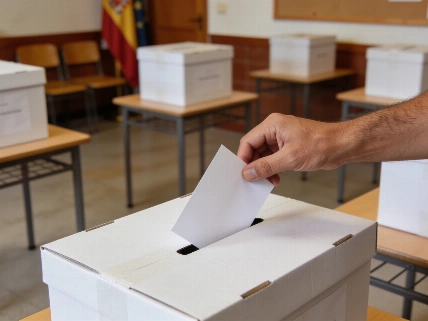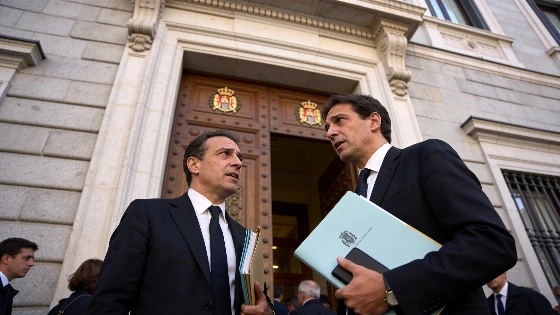
Spain’s Supreme Court is at the center of a heated dispute over voting rights for people granted citizenship through the Ley de Memoria Democrática. Prosecutors and state lawyers have refused to suspend their inclusion in the electoral roll.
The Supreme Court is now the stage for a dispute over the political rights of hundreds of thousands of new Spanish citizens. Both the Fiscalía and the Abogacía del Estado have rejected requests to freeze the electoral registration of people naturalized under the Ley de Memoria Democrática, arguing that doing so would deny them their constitutional right to vote. The Ministry of Política Territorial y Memoria Democrática says the law aims to address past injustices and restore rights to descendants of exiles.
The effort to halt these registrations comes from Vox and Iustitia Europa. They claim that the rapid addition of new voters—descendants of exiles and emigrants—could skew election results. Their legal challenge targets a July decision by the Junta Electoral Central, which said it was not competent to rule on the census effects of the so-called ley de nietos. Both groups are seeking urgent measures to stop the process, saying the integrity of the Censo Electoral de Residentes Ausentes (CERA) is at stake. As reported by El País, the debate has grown more intense ahead of upcoming elections, with concerns about the possible impact on both local and national outcomes.
In 2023, Spain saw a record number of citizenship applications under the Ley de Memoria Democrática, with over half a million approvals granted within a single year.
During two hearings in the Supreme Court’s administrative chamber, all sides presented their arguments. Vox’s Jorge Buxadé warned that if the court does not intervene, the CERA will keep growing "anomalously if not illegally," and called it a "gigantic and massive fraud." He pointed to figures showing the external census has grown by over 29,000 in two months and by more than 400,000 since 2023, attributing this to new nationals "without roots in Spain."
Official data from the Ministry of Política Territorial y Memoria Democrática offers more detail. By March 31, 2.4 million people had sought consular appointments to apply for citizenship under the law, with 1.2 million formally submitting requests and 544,722 approvals. Of these, 306,000 are already registered in the census. Not all of the recent increase in external voters comes from the ley de nietos; other naturalizations also add to the numbers. RTVE reports that the government says the process is subject to strict verification and documentation, aiming to prevent abuses and ensure only eligible applicants are approved.
Iustitia Europa’s president, Luis Pardo, urged the court to act before the next electoral cycle, arguing that changes to the CERA could become permanent if the process is not stopped before the January 1 deadline for closing the 2027 regional and municipal election rolls. He noted that in 162 municipalities, the number of external voters now matches or exceeds local residents, and in 558 municipalities, they make up at least half the electorate.
Spain’s National Statistics Institute (INE) has reported that the total number of Spaniards residing abroad surpassed 2.8 million in 2024, marking a steady increase over the past decade. This demographic shift has prompted electoral authorities to review procedures for external voting and update guidelines for municipal representation.
The Junta Electoral’s representative rejected claims of negligence, saying the body has requested more information from the Oficina del Censo Electoral and is working on clarifying instructions, including how each CERA voter’s municipality is determined. The lawyer for the Cortes called the legal challenge premature, while both the state attorney and the prosecutor said that denying the suspension would not cause irreparable harm—one of the main criteria for urgent measures.
Instead, they argued, the real harm would come from blocking the registration of new citizens, as this would deny them the right to vote—a fundamental guarantee under Spain’s Constitution. The state attorney pointed out that electoral law requires all Spanish citizens over 18 to be included in the census, regardless of how they obtained nationality, and that only a final criminal conviction can suspend this right. As noted by El Mundo, legal experts say any attempt to collectively disenfranchise new citizens would likely face constitutional challenges and international scrutiny.
This legal dispute comes as Spain increases oversight of political processes, with new rules on lobbying and transparency recently introduced. As reported earlier, the government has imposed strict penalties for lobbying violations, signaling a broader effort to protect democratic institutions.
The Supreme Court’s decision will set a precedent for how Spain balances the rights of new citizens with concerns about electoral integrity. The attempt by far-right parties to halt the registration process appears less about defending the system and more about limiting the political influence of newly recognized Spaniards. Prosecutors and state lawyers have made it clear: in Spain, the right to vote is a constitutional guarantee, not a privilege that can be suspended for political reasons.