A Swedish driver was fined close to one million Swiss francs after being caught at 290 km/h in a Koenigsegg on a Swiss motorway. The case set a new global record for speeding penalties and reignited debate over income-based fines.
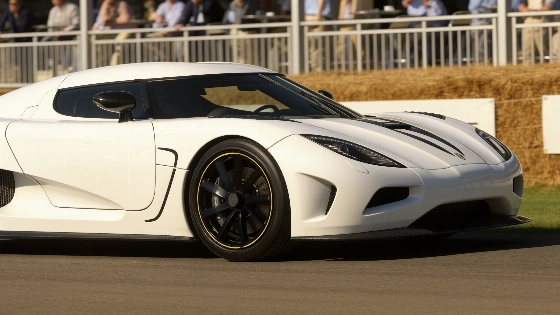
On a summer day in August 2013, Swiss traffic police recorded a Koenigsegg supercar racing down the A1 motorway between Bern and Lausanne at 290 km/h—more than double the legal limit of 120 km/h. The driver, a 37-year-old Swedish national, was quickly stopped, but the consequences would prove historic: the highest speeding fine ever imposed anywhere in the world.
The Koenigsegg, a hypercar engineered for closed tracks, was never meant for public roads at such speeds. Swiss authorities noted that the car’s velocity not only shattered the legal threshold but also rendered traditional speed cameras nearly useless. Only advanced radar technology was able to capture the violation with precision, highlighting the growing challenge of policing high-performance vehicles on European highways.
Unlike most countries, Switzerland calculates traffic fines based not just on the severity of the offense but also on the offender’s income and assets. This progressive system is designed to ensure that penalties remain a real deterrent, regardless of personal wealth. In this case, the court examined the driver’s daily earnings and total fortune before setting the penalty.
The result was a cumulative fine approaching one million Swiss francs—equivalent to nearly one million US dollars at the time. The court also ordered the immediate confiscation of the Koenigsegg and revoked the driver’s license, banning him from driving in Switzerland for an extended period. Authorities emphasized that public roads are not racetracks, and even the most exclusive cars are subject to the same rules as any other vehicle.
The case sparked international discussion about the effectiveness of income-based fines. Road safety experts praised the Swiss approach, arguing that proportional penalties are the only way to discourage reckless driving among the wealthy. Meanwhile, some luxury car enthusiasts expressed surprise at the scale of the punishment, though few defended the driver’s actions given the extreme speed involved.
News of the record-breaking fine quickly spread beyond Switzerland, serving as a stark warning to owners of high-powered vehicles. The story also drew attention to the broader debate over how best to enforce speed limits in an era of increasingly powerful cars. As highlighted in a recent analysis of speed camera effectiveness in Spain, where average driving speeds have dropped thanks to improved enforcement, the right technology and legal framework can make a measurable difference.
For context, Switzerland’s approach to traffic enforcement is among the strictest in Europe. The country’s progressive fine system has been in place for years, targeting not only speeders but also other serious traffic violations. While the Koenigsegg case remains exceptional, it underscores the principle that on Swiss roads, the cost of breaking the law rises in direct proportion to one’s ability to pay.