Organized groups in Ceuta are using taxis to move migrant girls and women to clients across the city. The lack of protection and isolation of these minors has fueled a surge in sexual exploitation since the July border breach.
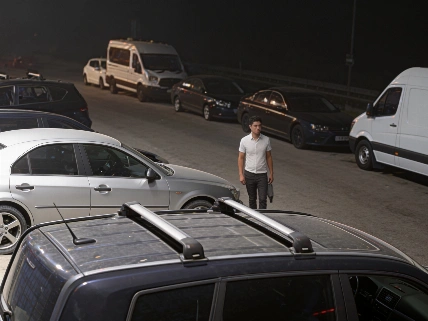
As night falls on Trampolín beach in Ceuta, a grim pattern repeats itself. Young women and girls, many just arrived from Morocco, leave the Hípica camp and gather at the bottom of the ramp. Cars with Spanish plates pull up. The girls get in, disappear for about 45 minutes, then come back to the same spot. Locals have seen this happen again and again.
These short absences point to a network of sexual exploitation that has grown since the mass entry into Ceuta on July 30. Witnesses and police sources told EL ESPAÑOL that criminal groups and opportunists are targeting the most vulnerable: unaccompanied minors and women with no family or support in Spain. Their isolation makes them easy targets for those looking to make money.
Local authorities estimate that around 13,000 migrants remain in Ceuta without regular status, including approximately 2,100 minors.
The networks run with cold efficiency. Mafias use their own taxis to pick up girls from the camp. They drive them to apartments or houses in different neighborhoods where clients wait. Afterward, the girls are brought back to the camp, often just before curfew. The usual payment is 20 euros, but some clients pay up to 30, depending on the girl's situation or the deal. Sometimes, money is not even exchanged—a bed for the night can be enough.
Police from the Unidad Central de Redes de Inmigración Ilegal y Falsedades Documentales (UCRIF) have been investigating since July. They are trying to find the locations where these meetings happen and break up the networks exploiting minors. Still, the problem goes on. Many girls are pushed into prostitution just to survive, buy clothes, or cover basic needs. Some, according to locals, have chosen this path themselves, hoping to escape their desperate situation.
The exploitation is not just from outside clients. Some men who entered Ceuta during the July breach also pay for sex. It is unclear where they get the money. The girls' vulnerability is made worse by the fact that, even inside the Hípica camp, they can leave during the day. Most of the exploitation happens then.
According to the Andalusian, Ceuta and Melilla prosecutor's office, 35 cases of sexual violence were reported in the first 45 days after the mass entry of migrants at the end of July, with about 40% of known victims being minors. Prosecutorial sources indicate that the real number of incidents may be higher due to underreporting, and most victims are women and migrant girls who arrived during the August crisis.
At first, things were even worse. Girls left on the streets faced sexual assault and violence before makeshift camps in neighborhoods like El Príncipe and Sidi Embarek gave them some shelter. But reports say prostitution still happened inside the camps, sometimes without the staff knowing.
The community has reacted in different ways. Some people in Ceuta have tried to warn families in Morocco about the risks their daughters and sisters face in Spain, hoping they will take them out of the city. Others, as reported in a previous investigation, have seen a wider rise in crime linked to social instability and lack of oversight.
Authorities still do not know the full scale of the problem. The number of minors involved, their ages, and the reach of the criminal networks are all unclear. What is clear is that the arrival of vulnerable migrants has made it easy for exploitation to spread. So far, the response has not kept up with the changing tactics of those making money from desperation.
This crisis shows what happens when protection fails and oversight is weak. Criminal networks move in fast. The ongoing investigation in Ceuta will test whether Spain can protect those most at risk and break up the illegal systems that thrive in the shadows of migration. Until real action brings real safety for these girls, the cycle of exploitation will keep repeating on the city’s streets and behind closed doors.