Tesla must recall almost 3 million electric cars in China after authorities flagged a critical safety issue with electronic door locks. The move follows a fatal accident and signals a major shift for the electric vehicle market.
Tesla is under pressure in China after regulators ordered the recall of nearly 3 million vehicles due to a safety defect that could trap occupants inside during emergencies. The issue centers on the electronic door locking system, which may fail in the event of a severe collision, making it impossible for passengers to exit the car quickly if the vehicle loses power.
The recall, announced by China's State Administration for Market Regulation, is the largest of its kind in the country's automotive history. It follows a fatal accident in October 2025, when a driver in a SU7 model was unable to escape after a crash caused the car to catch fire and the electronic locks to fail. This incident prompted authorities to ban fully electronic door locking systems starting in 2027, forcing manufacturers to ensure mechanical overrides are available for emergency situations.
In extreme situations, such as serious collisions that disable the vehicle's low-voltage system, passengers' ability to open doors and escape or be rescued could be compromised.
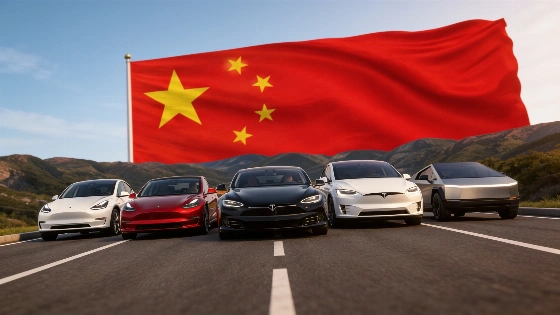
Of the 4.3 million electric vehicles affected across nine brands, Tesla accounts for the largest share, with 2.9 million cars—including Model 3 and Model Y units produced in Shanghai, as well as imported Model 3, Model S, and Model X vehicles—now subject to inspection and modification. The regulator warned that "in extreme situations, such as serious collisions that disable the vehicle's low-voltage system, passengers' ability to open doors and escape or be rescued could be compromised."
Other manufacturers, including Xiaomi, Leapmotor, and Xpeng, are also impacted, with hundreds of thousands of their vehicles recalled for similar reasons. The new rules require all future models to feature simple, mechanical door release mechanisms, marking a significant shift for the industry and challenging the dominance of electronic-only systems popularized by Tesla.
This sweeping recall comes at a time when competition in the Chinese electric vehicle market is intensifying. As noted in recent coverage of Hyundai's ambitious redesign of its Tucson SUV (see how Hyundai is adapting to new market realities), global automakers are under increasing pressure to meet evolving safety and regulatory standards in China.
For Tesla, the recall is a significant setback in its most important overseas market. The company must now retrofit millions of vehicles to comply with the new safety requirements, or risk losing ground to rivals who can adapt more quickly. The episode highlights the growing influence of Chinese regulators on global automotive trends and underscores the importance of practical safety features in the era of high-tech electric cars.
Industry analysts suggest that the move could accelerate the adoption of hybrid safety systems worldwide, as manufacturers seek to avoid similar regulatory challenges in other markets. For now, Tesla and its competitors face a race against time to resolve the issue before the 2027 deadline, with the future of their Chinese operations hanging in the balance.