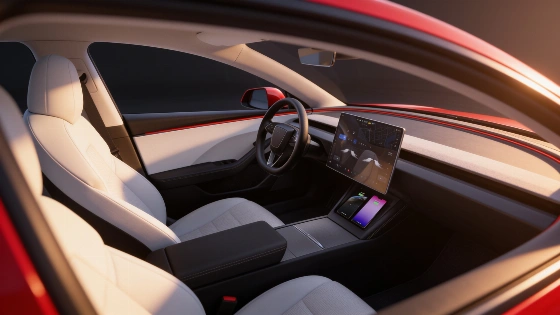
Tesla’s latest Grok update brings 116 new voice commands, transforming how drivers interact with their vehicles. But owners of older models with Intel Atom chips are left out, highlighting a growing tech divide within the brand.
Out of 170 spoken commands tested, Grok handled 116 without needing a single tap on the touchscreen. That’s a 68% success rate—strong for a car assistant, but it also means not every Tesla owner gets to take advantage of these new features.
The update, version OTA 2026.26.6.5, is only available for Teslas with AMD Ryzen processors. Owners with the older Intel Atom chip, no matter their software version, don’t get access to the expanded voice controls. This hardware cutoff splits the Tesla lineup: some drivers can now control almost everything by voice, while others are stuck with the old limitations.
According to Tesla’s official release notes, conversations with Grok are anonymous and not tied to a specific vehicle, addressing privacy concerns for users.
For those with the right hardware, Grok now understands natural language for a wide range of tasks: adjusting temperature and fan speed, folding mirrors, opening the glovebox, and changing wiper speed. Navigation is easier too—no more typing in addresses or searching for Superchargers and restaurants by hand. Just say what you want, and Grok finds it.
Security features are included as well. The assistant can save Dashcam clips or turn on Sentry Mode with a voice command, so you don’t have to dig through menus. Grok can also handle several instructions at once: fold the mirrors, speed up the wipers, and lower the temperature, all in a single phrase.
There are a few ways to activate Grok: say “Hey Grok,” hold the voice button on the steering wheel, or launch it from the app launcher. However you start, the system uses natural language processing to figure out what you want, moving past the old, menu-based voice controls.
Tesla’s release notes specify that Grok’s advanced voice features require Premium Connectivity or a Wi‑Fi connection, meaning some capabilities may be unavailable without internet access. The rollout of update 2026.26.6.5 has primarily targeted newer vehicles and the North American market, with European models and older hardware seeing slower adoption.
The latest release notes (2026.27.200) mention options to customize Grok’s voice and personality, plus expanded support for making calls, playing music, and searching the control panel by voice. The main change, though, is how drivers interact with their cars: what used to mean digging through touchscreen menus can now be done with a sentence.
There are still limits. Advanced settings and Full Self-Driving (FSD) features still require manual input—either on the screen or with the steering wheel button. And for those with Intel Atom-based Teslas, the line is clear: there’s no word from Tesla on whether any version of Grok’s new features will reach these older cars, or if the hardware gap is permanent.
This isn’t the first time a hardware change has set new boundaries for what a car can do. The auto industry has seen similar divides before, like the shift from classic performance tuning to electric platforms—something we covered in our recent article on Irmscher’s move from the Opel Ascona to the Leapmotor B10 Dynamic.
For Tesla, the Grok update is a response to growing competition, especially from Chinese automakers who have pulled ahead in infotainment and AI features. Elon Musk’s company is under pressure to show it can still lead in digital innovation, not just battery range or acceleration.
Tesla is reportedly working on more upgrades, including FSD features like pothole avoidance—promised since 2019 but still without a release date. For now, the Grok update points to where things are headed: voice controls are the future of in-car tech, but only for those who bought in at the right time. The rest are left watching the gap widen with each new update.