Valencia Breathes New Life into 21 Closed Newsstands. Valencia authorities have announced a tender to reopen 21 closed newsstands. Under the new terms, kiosks will be able to sell not only newspapers and magazines, but also a range of other goods. The initiative aims to revitalize urban neighborhoods and support small businesses.
Valencia is launching a program to revive 21 newspaper kiosks that have remained closed for many years. The municipality has announced a tender for the long-term lease of these spots, aiming to give them a new purpose and support neighborhood development. According to the terms, winners will be able to use the kiosks for 20 years with the possibility of renewing for another 20 years, paying only an annual fee for the use of municipal land.
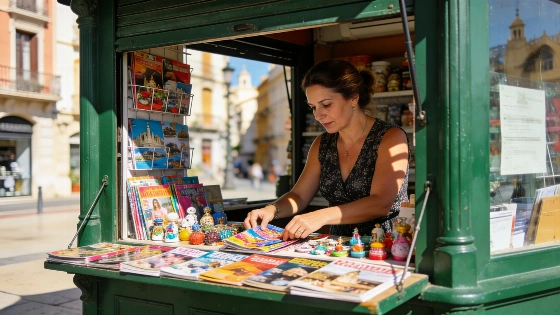
Currently, 53 kiosks operate in the city, but many are barely staying afloat due to declining demand for print media. The authorities and the Press Sellers Association have decided to broaden the range of goods: kiosks can now sell not only newspapers and magazines, but also stationery, drinks, coffee, souvenirs, lottery tickets, transport passes, and operate as parcel pick-up points. This approach is expected to make the business more sustainable and appealing to new tenants.
Special attention is being paid to the social aspect: priority in the competition will be given to people with disabilities and citizens over 55. Authorities hope that kiosks will again become not only sales points, but also meeting spots, and eventually venues for cultural and educational events. As city planning councilor Juan Giner notes, kiosks have traditionally been an important part of city life and have provided access to information for those who do not use digital technologies.
The Association of Press Sellers emphasizes that interest in the new terms has been high: after announcements were posted on closed kiosks, there were numerous calls from people eager to try this business. According to the head of the association, Ana Valle, many potential tenants are already ready to get to work if there are no bureaucratic delays.
Owners of operating kiosks note that survival requires searching for new formats. For example, souvenirs and cold drinks sell well in tourist areas, while magazines and children's goods are more popular in residential neighborhoods. Some kiosks even use social networks to attract customers. It is important to keep the product range diverse but not to overload the small space.
The authorities in Valencia expect that their experience will interest other cities as well. According to association representatives, there are already plans to present the project at the Federation of Municipalities and Provinces. This approach could serve as an example for other regions, where kiosks are also losing relevance due to digitalization.
For reference: press kiosks in Spain have traditionally been not only points of sale for newspapers, but also places to meet and socialize. In recent years, their number has declined due to falling demand for print editions and the growth of online media. In some cities, as noted by an article on new initiatives in Barcelona, authorities are also looking for ways to preserve such establishments by adapting them to modern realities. In Valencia, the focus is on expanding the range of products and enhancing the social role of kiosks.