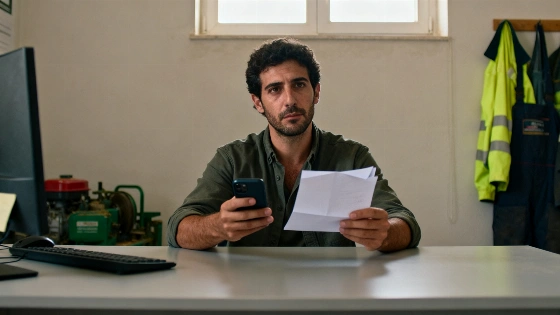
Court Declares Dismissal of Worker for Personal Calls to Morocco from Work Phone Illegal. A worker from Murcia was dismissed after the company discovered personal phone calls to Morocco totaling over 550 euros. The court ruled the dismissal unlawful, stating the employer failed to specify the details of the violations, and now must reinstate the employee or pay compensation.
An employee of one of Murcia's agricultural companies found himself at the center of a labor dispute after management accused him of using a work phone for personal international calls. The phone bill totaled €557.24, and the calls were made to Morocco. Despite having previously signed a commitment to use the phone for work purposes only, the company failed to properly process his dismissal.
In September 2022, the worker received three disciplinary notices within two days: first — a 16-day suspension from work and pay, then — a preliminary notice of impending dismissal, and the next day — a final letter terminating his employment. The last document listed “serious misconduct,” “insults,” and “abuse of trust,” but contained no specific facts or dates.
The court of first instance sided with the employee: the employer’s statements were deemed too vague, and the lack of specifics deprived the worker of the opportunity to defend himself. The company tried to appeal the decision, but the Murcia High Court Tribunal confirmed that the dismissal was handled with violations and is therefore unlawful. The company must now either reinstate the employee or pay him compensation in the amount of €7,283.23.
During the proceedings, the company insisted that all notifications were delivered simultaneously and requested the inclusion of other disciplinary measures in the case. However, the court rejected these arguments: neither the documents nor the sequence of letters would have changed the essence — the key issue remained the lack of specific accusations in the final letter.
The judges emphasized that, by law, the employer is required to clearly and in writing specify the exact accusations against the employee, so that they can defend themselves. In this case, this was not done, and the employee found themselves unable to understand the exact reason for their dismissal.
A similar case was recently considered in another field: a woman from Andalusia failed to obtain full disability status after a traffic accident, because the court took into account a video showing her doing household chores — more details about this case can be found at the link in the material on russpain.com.
The decision in the case of the worker from Murcia has not yet entered into force: both parties have the right to file an appeal with the Supreme Court. However, this case underscores how important it is for employers to follow formal requirements when dismissing employees — otherwise, even an obvious violation may go unpunished.