Volkswagen Delays Electric Golf: Iconic Model Postponed Until 2030. Volkswagen has officially postponed the launch of the fully electric Golf by at least two years. The company cites the need to further develop the platform and shifting priorities in response to competition and market conditions.
The phrase “there is no need for an electric Volkswagen Golf in 2028,” spoken by brand CEO Thomas Schäfer, has sent an unexpected signal to the market. The highly anticipated launch of the electric version of the brand's most iconic model has now been postponed until at least 2030. This decision confirms that Volkswagen is changing its strategy and is in no hurry to electrify its flagship hit.
The delay is not only due to changes in the market environment, but also to technological challenges. As company management points out, the new-generation SSP platform—on which the future Golf is to be built—is not yet ready for mass production. This architecture is promised to deliver an 800-volt system, ultra-fast charging, and integration with modern software, but its development has faced setbacks. According to Volkswagen, it is unacceptable to launch an iconic model on immature technology: the Golf should become a benchmark for efficiency and profitability, not an experiment.
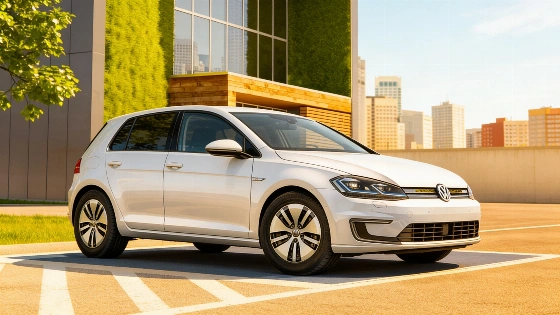
At the same time, the company has updated the eighth-generation Golf with gasoline and hybrid engines, extending its commercial life until the end of the decade. The new hybrid versions can already travel up to 100 kilometers on electric power alone, which reduces the urgency of replacing the model with a fully electric one. The company emphasizes that rushing could lead to an expensive electric Golf competing with the brand’s own ID family models, while the price gap with gasoline versions is still too large for the mass market.
Prioritization within the group has also played an important role. The first to receive the new SSP platform will be the premium brands—Audi and Porsche. This will allow expensive technologies to be tested on higher-end models before making them more accessible to the mass segment. In the coming years, Volkswagen itself will focus on launching more affordable electric vehicles, such as the anticipated ID.2, to fill gaps in its lineup and maintain its market position.
Another factor is competition from Chinese manufacturers, primarily BYD, as well as the instability of electric vehicle prices. Volkswagen admits that charging infrastructure in Europe is developing slowly, and demand for electric cars remains volatile. Postponing the launch of the Golf to 2030 gives the company time to monitor market trends and optimize costs, so that the new model will debut at the most favorable moment.
Thus, Volkswagen is betting on caution and technological maturity rather than racing towards deadlines. For fans of the brand, this means waiting longer for the electric Golf, but the company promises that the final product will meet expectations and set a new standard in its class.