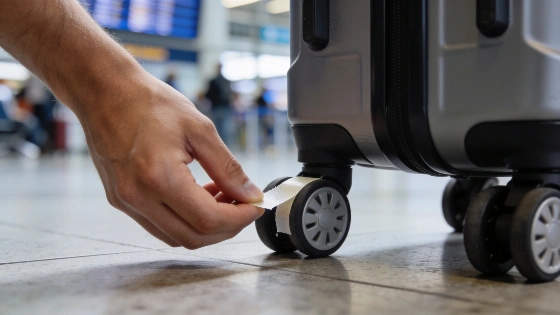
A viral travel hack claims that taping your suitcase wheels can prevent dirt and bacteria during trips. But major luggage brands and experts remain unconvinced, urging travelers to stick to proven cleaning methods instead.
Travelers looking for ways to keep their luggage clean have recently revived a controversial hack: wrapping suitcase wheels with adhesive tape before a trip. The idea, which resurfaced in online posts from August 2026, promises to shield wheels from dust, sand, and grime picked up in airports and on city streets. Once the journey ends, the tape is peeled off, supposedly leaving the wheels spotless and reducing the need for deep cleaning.
Despite its popularity on social media, the tape method has not been endorsed by leading luggage manufacturers. Guides from Delsey, Samsonite, and Travelpro make no mention of taping wheels. Instead, they recommend removing debris, washing with mild soap and water, and thoroughly drying the wheels after each trip. These brands emphasize that proper cleaning, not makeshift barriers, is the key to maintaining luggage hygiene and performance.
How the Tape Hack Works
Proponents of the tape trick suggest covering only the part of the wheel that touches the ground, taking care to avoid the axle and rotating mechanism. The tape acts as a disposable layer, collecting visible dirt and allowing travelers to discard it at their destination. However, there is little agreement on which type of tape works best—some recommend duct tape, others electrical or self-fusing silicone tape. No independent studies have confirmed that this method reduces wear or contamination.
A 2025 commercial test by InsureandGo found that suitcase wheels and bases can harbor hundreds of bacterial colonies after passing through busy transport hubs. Yet, the study did not evaluate the effectiveness of tape, nor did it provide peer-reviewed evidence that taping wheels lowers the risk of infection or extends wheel life. The available data does not support claims that the hack offers significant health benefits.
Potential Risks and Manufacturer Advice
Improperly applied tape can cause more problems than it solves. If the tape covers the axle or is not centered, it may wrinkle, rub against the support, or interfere with wheel rotation. Instructions circulating online warn that any increase in noise, resistance, or uneven movement should prompt immediate removal of the tape. Overlapping layers can also thicken the wheel, affecting how the suitcase rolls. Manufacturers stress that tape should never be used as a substitute for repairs if a wheel is loose, cracked, or blocked.
British Airways does not comment on the tape hack but advises travelers to secure loose straps and handles to prevent snags—advice that applies equally to any exposed tape ends. Travelpro's repair guide reserves duct tape for temporary fixes on already broken wheels, recommending proper replacement parts for lasting solutions. Preventive taping is not recognized as a standard maintenance practice by any major brand.
Best Practices for Cleaning Wheels
Delsey's official guide recommends removing dust, sand, and hair with a soft brush or old toothbrush, followed by cleaning with warm soapy water and a microfiber cloth. Wheels should be dried completely before storage, and silicone lubricant should be used sparingly on the axle if needed. Travelpro echoes these steps and suggests checking for stones or hair after every trip. Samsonite advises using a damp cloth and mild soap, avoiding alcohol-based products that could damage finishes. The CDC notes that soap, water, and friction are generally sufficient to remove most dirt and germs from surfaces, reserving disinfection for specific health risks.
When to Try—and When to Skip—the Tape Trick
For those curious about the tape method, experts suggest testing it at home on a short walk before using it for travel. The tape should only cover the rolling surface, never the axle or support. If the suitcase rolls unevenly or the tape peels up, it should be removed immediately. The tape must also be discarded at the end of the journey to avoid sticky residue. If the hack interferes with wheel movement, it is best abandoned in favor of regular cleaning.
Ultimately, the most reliable approach remains the one recommended by manufacturers: clean your suitcase wheels after each trip and keep luggage away from beds, tables, and textiles until it is sanitized. Airline policies on checked and carry-on baggage are unaffected by this trend, and there is no evidence that taping wheels is required or even recognized by airports. As with many viral travel tips, a little skepticism—and a good cleaning routine—goes a long way.