A preventive power of attorney lets you appoint someone you trust to manage your affairs if illness strikes. Notary María Cristina Clemente warns that signing this document early can spare families from court battles and financial complications. Many only discover its importance too late.
When Alzheimer's or another serious illness erodes a person's ability to make decisions, families often find themselves facing not just emotional turmoil but also legal and financial obstacles. Notary María Cristina Clemente Buendía, based in Alicante, is urging people to consider a solution that is still unfamiliar to many: the preventive power of attorney.
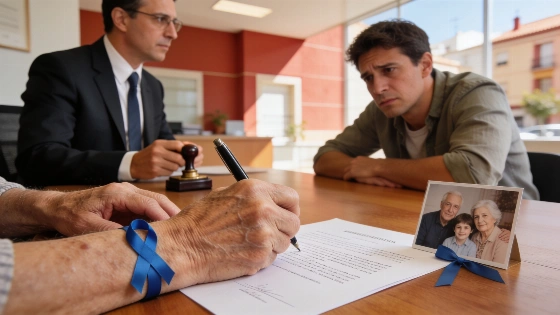
This notarial document, as Clemente explains in a recent Instagram video, allows an individual to formally designate a trusted person to act on their behalf if they lose the capacity to manage their own affairs. Unlike a will, which only takes effect after death, the preventive power of attorney is designed to operate while the person is still alive but unable to make decisions due to illness or incapacity.
How the Preventive Power of Attorney Works
According to the Consejo General del Notariado, the preventive power of attorney is a public document authorized by a notary. It enables the grantor to appoint one or more representatives who can step in if the grantor becomes unable to act for themselves. This legal tool can help families avoid lengthy and costly judicial proceedings to establish support measures for the affected person.
Clemente highlights a common scenario: a person with Alzheimer's needs to move into a care home, but their assets are tied up in property rather than cash. Selling the family home requires a valid signature, which may be impossible if the disease has already progressed. Without a preventive power of attorney, relatives may be forced to go to court to obtain the authority to manage the person's assets, often leading to delays and family tensions.
Timing Is Critical
The key, Clemente stresses, is to sign the preventive power of attorney while the person is still fully capable of making decisions and expressing their wishes before a notary. Spanish civil law allows for the inclusion of clauses that ensure the power remains valid if support is needed in the future, or that it only comes into effect under those circumstances.
Even in the early stages of a diagnosis, it may still be possible to grant this power, provided the individual retains sufficient capacity. This gives them the opportunity to choose who will act for them, rather than leaving the decision to the courts or to chance.
What the Appointed Person Can Do
The authority granted by a preventive power of attorney is not unlimited. The document must specify the powers given, the areas in which the representative can act, and the conditions under which the power can be used. It can also establish whether one person acts alone, several act jointly, or others act in succession.
Spanish law allows for additional safeguards, such as oversight mechanisms, instructions, and protections against abuse or conflicts of interest. The document can also set out how the arrangement will be reviewed and under what circumstances it will end.
With the right provisions, the appointed person can handle tasks such as selling property, managing bank accounts, paying for care, or dealing with other financial matters. However, the power of attorney ends with the death of either the grantor or the representative, so it does not replace a will or serve as a tool for inheritance planning.
Why Early Action Matters
Many families only learn about the preventive power of attorney when it is too late to use it. By acting early, individuals can ensure their wishes are respected and spare their loved ones from unnecessary legal battles. As Spain's population ages and the incidence of dementia rises, understanding and using this legal instrument could become increasingly important for families seeking to protect both their relatives and their assets.