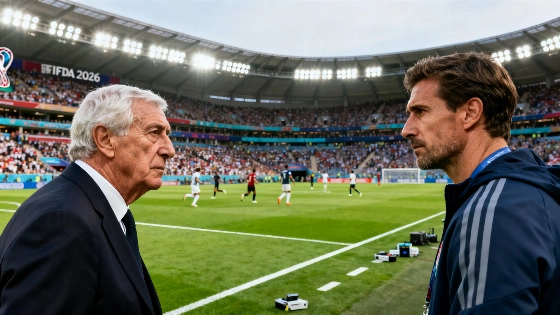
World Cup 2026: 48 Coaches, Records, and Unexpected Appointments at the Start of the Tournament. The upcoming World Cup 2026 features 48 coaches from 27 countries. Among them are record holders by age, a generational shift, and historic appointments. For the first time, Brazil will be led by a foreign coach.
Ahead of the start of the 2026 FIFA World Cup in Canada, Mexico, and the USA, attention is focused not only on the players but also on the coaches. This year, the tournament features 48 head coaches from 27 countries—the largest number in World Cup history. Among them are both seasoned veterans and representatives of a new generation, creating a unique mix of styles and approaches.
Dick Advocaat holds a special place as head coach of the Curaçao national team. At 78, he has become the oldest coach ever to work at a World Cup. Remarkably, his appointment was also one of the most recent: after leaving for family reasons, he returned to work just a month before the tournament began. Other newcomers include Georgios Donis (Saudi Arabia) and Carlos Queiroz (Ghana); both were appointed in April. Queiroz, incidentally, is catching up with Bora Milutinović in the number of World Cup final tournaments coached—this is his fifth, behind only Carlos Alberto Parreira.
The list of coaches also includes those who did not qualify with their current teams but still made it to the tournament. Alongside Queiroz and Donis are Mohamed Ouahbi (Morocco), Sabri Lamouchi (Tunisia), and Fabio Cannavaro (Uzbekistan). This approach to coach appointments is becoming increasingly noticeable amid growing competition and the expanded tournament format.
Among the nationalities of coaches, Argentina, France, Spain, Italy, Germany, England, the Netherlands, Morocco, Australia, and Bosnia and Herzegovina stand out. Some countries are represented by several specialists at once, underscoring their influence on the global football scene.
Fabio Cannavaro and Didier Deschamps are the only current coaches who have already won the World Cup as players. Deschamps, who has led France since 2012, will finish his tenure after this tournament, making him the longest-serving coach among the participants. His closest rival in terms of seniority is Zlatko Dalić of Croatia, who has been with the team since 2017. In total, 18 coaches at this World Cup have previously participated in the tournament as players, although not all took to the field: for example, Julen Lopetegui (Qatar) and Emerse Faé (Ivory Coast) remained on the bench.
One of the most unusual stories is the meeting of Javier Aguirre and Hugo Broos. In the opening match between Mexico and South Africa, they will once again be on opposing sides, but now as coaches. Exactly 40 years ago, they faced each other as players in the opening match of the 1986 World Cup at the Azteca Stadium, where Mexico defeated the Netherlands 2-1. Now their duel opens a new tournament, adding intrigue to the start of the competition.
Only 21 out of 48 national teams entrusted their management to a coach of their own nationality. Historically, no team has ever won the World Cup with a foreign manager, yet this year several favorites have made that choice. England is led by Thomas Tuchel, who became the fourth foreigner in charge of the Three Lions. Portugal entrusted the team to Roberto Martinez, while Brazil, for the first time in its history, invited a foreign specialist — Carlo Ancelotti. His appointment in May 2025 set a precedent for a country that has won the tournament five times.
The expansion of the tournament format and new coaching appointments have already sparked interest not only from fans but also from broadcasters. For example, viewers in Chile will be able to watch 52 matches, including key group stage games, for free, as noted in the report on World Cup 2026 broadcasts.
For reference: the 2026 World Cup is being held for the first time across three countries and has brought together a record number of participants. For the first time in history, 48 teams will compete in the tournament, broadening its geography and increasing the number of matches. Among the coaches are representatives from all football continents, and the tournament itself promises to be the largest and most unpredictable in the history of world football.