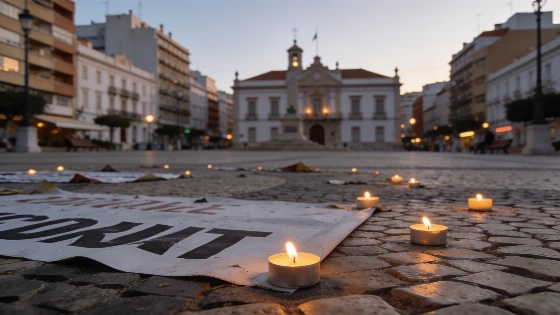
Thousands of residents filled Ceuta’s Plaza de la Constitución on Sunday evening after more than 70,000 people entered the city. The demonstration, one of the largest in recent memory, was organized by Ceuta’s four basic religious communities under the slogan “Enough. Ceuta will not surrender.” Protesters demanded a response to the crisis that began on July 30, when the city’s border was overwhelmed and 83 deaths were reported.
The scale of the crossing was comparable to Ceuta’s resident population, estimated at about 83,000. Estimates of how many people entered on July 30 and 31 differed: Spain’s central government put the figure at roughly 80,000, while the autonomous city authorities placed it above 96,000. By early August, estimates of how many people remained also diverged, ranging from about 2,000 information from the Interior Ministry to 8,000 to 11,000 according to the city government.
Participants from neighborhoods across Ceuta joined the rally, which began at 8:00 p.m. Organizers stressed that the event was strictly non-partisan, keeping political parties and ideological banners away. They aimed to send a message of unity from Ceuta’s diverse society in the face of an unprecedented situation that had deeply affected daily life and security.
The demonstration followed ten days of mounting tension and uncertainty. The sudden influx put impressive pressure on local infrastructure and public services, while straining community relations. Later casualty tallies changed over time and differed in geographic scope: Ceuta authorities reported about 100 victims by August 6, while a subsequent count cited at least 141 deaths by September 8 across Ceuta, nearby waters and Fnideq. Residents also raised concerns about the city’s capacity to meet humanitarian and logistical demands as authorities worked to address the needs of both locals and newcomers.
Ceuta, a Spanish enclave on the North African coast, has long been a focal point for migration into Europe. The July arrivals took place by land and sea from Morocco between July 29 and 31. After the first mass returns, demonstrations began around August 9 amid complaints about the pace of the Spanish government’s response. On August 16, hundreds of migrants demonstrated at El Trampolín beach, demanding access to asylum procedures. Their appeal differed from local calls for government action on security and capacity.
The response continued well beyond the initial crossings. The Spanish government said more than 12,700 people returned to Morocco between August 10 and October 20, 2026, and that most adult migrants still in the city were accommodated in facilities provided or enabled by the basic administration. Meanwhile, more than 280 organizations and 90 public figures backed mobilizations calling for “humanity, rights and dignity.” The signatories included voices from cultural life alongside people in academic and legal circles, bringing civil society’s focus on protection and anti-racism into the debate over border management.
Separated from mainland Spain by the Strait of Gibraltar and bordering Morocco, Ceuta is a frequent entry point for migrants seeking access to Europe. The events of July and August 2026 renewed debate over migration policy and humanitarian obligations, as well as the resources needed to support residents and people arriving in search of safety or chance.