Three workers died in Madrid this year in accidents tied to subcontracted firms. Unions warn that layered contracts weaken safety. Authorities are investigating responsibilities and prevention gaps.
Madrid has seen three fatal workplace accidents this year, each involving employees of subcontracted companies. The deaths of Roberto Rebollo, Tomás García, and Raquel Ocaña have intensified scrutiny of how subcontracting practices may undermine safety standards and complicate accountability in the region.
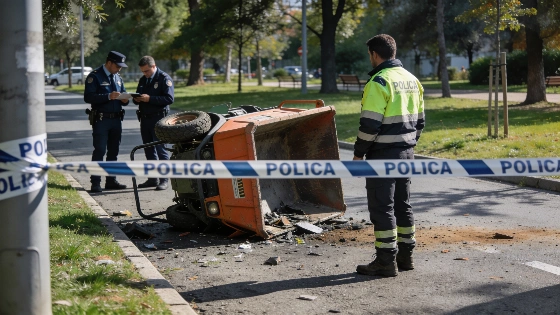
Roberto Rebollo, a 54-year-old gardener from Villamuelas (Toledo), died when the dumper he was operating overturned in Enrique Tierno Galván Park. Despite resuscitation efforts, he could not be saved. The incident is under investigation by the Municipal Police, while Valoriza, the company subcontracted by Madrid City Council, has not commented on its role or responsibilities.
In a separate incident, Tomás García, a 23-year-old stage assembler originally from Colombia, lost his life after falling ten meters while setting up a concert stage in El Escorial. He was not using a safety harness at the time. His family has publicly demanded accountability, citing a lack of support from BabaluGroup Producciones S.L., the subcontracted employer.
Raquel Ocaña, aged 60 and responsible for packaging at a facility in Loeches (Madrid), died after being crushed by a 315-kilogram pallet while assisting with loading operations at TECNAC. The Labour Inspectorate later determined that the preventive training provided was neither adequate nor sufficient for the tasks involved.
Union representatives, particularly from Comisiones Obreras (CC OO), argue that the prevalence of subcontracting is closely linked to increased workplace accidents. They point to Spain’s legal framework, which allows up to four levels of subcontracting, as a factor that complicates risk prevention and often reduces it to a paperwork exercise rather than effective oversight. This multi-layered structure can make it difficult to assign clear responsibility when accidents occur.
Labour deaths in Madrid are most frequent in construction and service sectors, with a noted rise in fatal incidents during commutes. The importance of unions being present in accident investigations is repeatedly emphasized as a way to protect workers’ rights and ensure thorough examination of each case. The challenges of managing safety across multiple subcontracted layers are not unique to Madrid; similar issues have been observed in other Spanish regions, as highlighted by recent investigations into public sector hiring practices, such as the probe into recruitment processes in Valencia.
Spain’s labour law permits extensive subcontracting, but critics argue that this flexibility often comes at the expense of effective safety coordination. The deaths of Rebollo, García, and Ocaña have brought renewed calls for stricter enforcement of safety regulations and clearer lines of responsibility among all parties involved in subcontracted work. According to official data, workplace fatalities in Spain have shown a persistent link to sectors with high rates of subcontracting, reinforcing concerns about the adequacy of current prevention measures. The ongoing investigations in Madrid may influence future policy discussions on how to better protect workers in complex contracting chains.