The Santa Águeda Brotherhood in Tiedra has removed its rule requiring women to be married in the Church. Now, single and divorced women can join, provided they are baptized. The change reflects shifting social norms in rural Spain.
The Santa Águeda Brotherhood of Tiedra, a centuries-old women’s association in a Valladolid village, has voted to end its longstanding rule that only women married in the Church could become full members. The decision, made by a majority of the 140 registered members during an extraordinary general assembly, marks a significant shift for the group, which has been part of local tradition since the 17th century.
Under the previous statutes, joining the brotherhood required not only baptism but also legal and ecclesiastical marriage. This restriction excluded single, separated, and divorced women from participating fully in the annual festivities and rituals. The revised rules, approved on August 17 and now awaiting ratification by the Archbishop of Valladolid, Luis Argüello, maintain the baptism requirement but remove the marriage condition.
Belén Calvo, the group’s treasurer, explained that the reform had been under discussion for years but was previously rejected in 2019. She noted that the change reflects the evolving makeup of families in rural Spain, where traditional church weddings have become rare and many women choose not to marry. Calvo emphasized that the brotherhood’s purpose is to unite women, not exclude them based on marital status. She also highlighted that the process was conducted with respect and constructive dialogue, even though 28 of the 97 voting members opposed the change.
The update to the statutes was welcomed by local political groups, including Izquierda Unida (IU) in Tiedra, which praised the move as a necessary adaptation to modern realities. In a statement, IU pointed out that only about 16% of women in Spain now marry in the Church, suggesting that maintaining strict entry requirements could threaten the survival of such traditional organizations. The party also noted that the Santa Águeda festivities have undergone multiple reforms over the centuries to remain relevant.
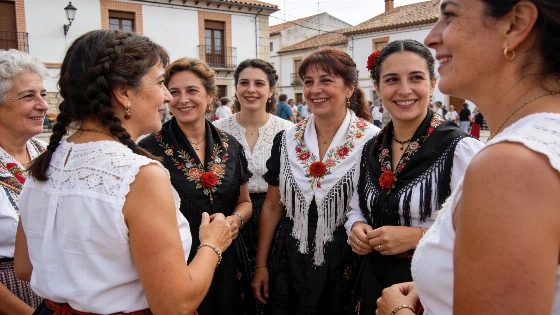
While the brotherhood’s rituals, traditional dress, and communal activities—such as attending mass, dancing together, and rotating the role of mayordoma—will continue unchanged, the new rules are expected to make the group more inclusive and sustainable. The change comes at a time when many rural communities are adapting to demographic shifts and evolving social norms. As seen in other parts of Spain, local traditions are increasingly being reinterpreted to reflect contemporary values and ensure their continuity.
Recent developments in Spanish society highlight the broader context of such changes. For example, debates over tradition and inclusion have also surfaced in other areas, such as the ongoing challenges faced by authorities in Ceuta regarding migration and community integration, as reported in coverage of the Ceuta migrant crisis. These shifts underscore how local customs and national debates are often intertwined as Spain navigates social transformation.
The Santa Águeda Brotherhood’s decision is part of a wider trend in Spain, where religious and cultural organizations are reassessing their rules to better reflect the realities of modern life. In rural areas like Tiedra, such changes are seen as essential for preserving community identity while embracing diversity among residents. The move is expected to encourage broader participation and help safeguard the future of one of Valladolid’s most cherished traditions.