Barcelona prepares for the Tour de France Grand Départ with extensive road closures and public transport changes. Authorities urge metro use as key streets shut down. Cycling fans and residents face three days of major mobility restrictions.
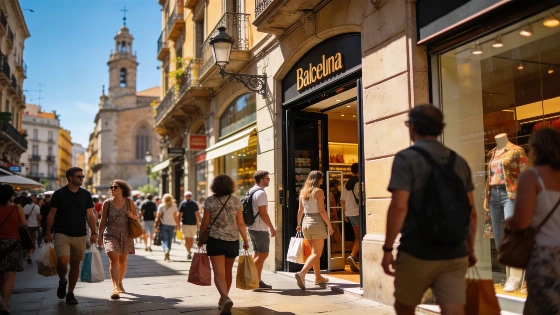
Barcelona is set for a dramatic transformation as the city hosts the Grand Départ of the Tour de France from July 2 to 5. The event will bring sweeping traffic restrictions, with authorities closing off major roads and deploying 70 kilometers of barriers to secure the cycling routes. Residents and visitors are being urged to rely on the metro, which will operate with up to 40% more capacity, especially on lines 1 and 5, to cope with the expected surge in demand.
The official festivities begin Thursday evening with a high-profile team presentation. Cyclists will ride from the historic Sant Pau hospital to a stage in front of the Sagrada Familia, accompanied by performances from Sílvia Pérez Cruz, Lia Kali, the Castellers de Vilafranca, and the Cor de Teatre. The spectacle is designed for a global television audience, with 190 countries expected to tune in. Traffic in the area will be heavily restricted, affecting streets such as Ronda del Guinardó, Sant Quintí, Còrsega, Dos de Maig, Aragó, Diagonal, Nàpols, Sant Antoni Maria Claret, and Castillejos. Access to parking will be limited, and movement within the perimeter will be strictly on foot during the event's peak hours.
Preparations for the closures start as early as the night of July 1, with barriers going up along Avenida de Gaudí and definitive roadblocks from 14:00 on Thursday. The main presentation runs from 18:30 to 20:00, with gradual reopening after 21:30. The Tour's traditional publicity caravan, featuring around 100 vehicles distributing sponsor gifts, will precede each stage and is expected to draw large crowds along the route.
Saturday marks the first stage, a team time trial slicing through the city from Parc del Fòrum to Montjuïc. Key arteries like Avenida del Litoral, Bac de Roda, Llull, Josep Pla, Guipúscoa, Aragó, Mallorca, and Passeig de Gràcia will be closed. The route continues through Tarragona, Plaça d'Espanya, and Maria Cristina, ending at Montjuïc. Parking bans along the course begin Friday at 18:00, with full circuit closure from 13:30 on Saturday. The most restrictive period will be between 16:00 and 19:30, coinciding with the race, and normal traffic is expected to resume after 20:30. Ronda del Litoral will see targeted closures, mainly towards Besòs, to ensure safety.
On Sunday, the second stage starts in Tarragona and finishes in Barcelona, with the final climb on Montjuïc. The impact on city traffic will be less severe but still significant, especially around Montjuïc, Avenida Paral·lel, Passeig de Montjuïc, Avenida Miramar, and Carretera de Montjuïc. Closures begin at midday, with Montjuïc effectively isolated between 15:45 and 17:45. Traffic will gradually return to normal after 18:00. The cycling caravan departs at 11:30, with riders expected to reach the finish line between 17:26 and 17:46.
To maintain pedestrian mobility, more than 50 crossing points will be set up along the circuits, each staffed and signposted, ensuring no crossing is more than five minutes away on foot. Temporary elevated bridges will also be installed for safe passage without disrupting the race, coordinated by the Guardia Urbana and Civil Protection. Special attention will be given to people with reduced mobility and those with strollers, who will receive assistance at crossings.
Public transport will be heavily modified. Metro lines will see increased frequency, but on July 2, L2 trains will skip the Sagrada Familia station from midday, while L5 will operate normally with extra service. Numerous bus lines will be rerouted or suspended: 12 lines on Saturday, including H10, H12, H14, H16, 55, 91, 125, 141, 150, 192, and tourist routes 100 and 101; and six lines on Sunday, including 13, 115, 121, 125, 150, and 157. The Bicing public bike system will have 20 stations out of service along the routes, with some closures starting days in advance due to event preparations.
For cycling fans, six secure bike parking areas will be available, four near the race route, one at the Fan Park on Passeig de Lluís Companys, and another at Parc del Fòrum. Each will accommodate up to 150 bikes and personal mobility vehicles, free of charge. Additional logistical changes include the removal or relocation of waste containers along Avenida de Gaudí, Calle València, and other affected streets, as well as adjustments to loading and unloading schedules.
Street cleaning will be intensified in the days leading up to the event, with 250 workers and 120 cleaning units deployed to ensure the roads are free of gravel and debris, minimizing risks for cyclists. Emergency cleaning teams will be on standby during the races to address any urgent needs.
After the Barcelona stages, the Tour de France continues with stage three on Monday, covering 196 kilometers from Granollers to Les Angles, passing through Vic, Ripoll, Ribes de Freser, Collada de Tosses, La Molina, Puigcerdà, and Font Romeu. The stage features a challenging 3,950-meter elevation gain, with the caravan departing at 9:55 and riders expected at the finish between 16:54 and 17:23.
While Barcelona braces for the logistical challenges of hosting the Tour, other Spanish cities are also experiencing significant weather and transport events. For example, Madrid recently saw a sharp drop in daytime temperatures after a prolonged heatwave, as reported in this coverage of the sudden cooldown in the capital. Such events highlight the ongoing need for cities to adapt quickly to large-scale disruptions, whether from sporting events or climate shifts.