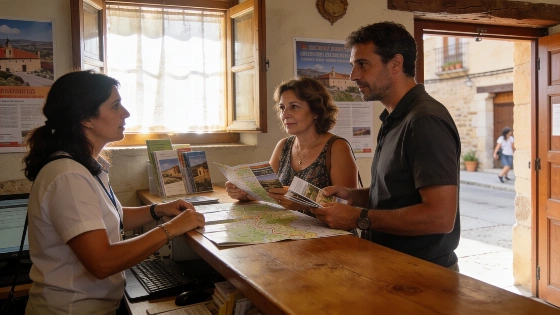
Soria’s tourism offices handled over 55,000 queries in August, up 25% from last year. The total solar eclipse and a shift toward rural destinations fueled the surge. Madrid and France led the influx.
Soria’s rural region saw an unprecedented jump in tourism this August, with visitor numbers breaking all previous records. The province’s 16 official tourism offices handled 55,425 queries last month, a 25% increase over August 2025. The rare total solar eclipse played a major role, drawing new attention to the area and changing travel patterns across Spain.
Madrid residents made up the largest group of visitors, with 10,956 arrivals. They were followed by travelers from Castilla y León, Catalonia, Aragón, and the Comunidad Valenciana. International visits also rose: 1,419 tourists came from France, and others arrived from the United Kingdom, United States, and several Latin American countries. In total, 4,066 international tourists were counted in August.
The eclipse did more than fill hotels for a weekend. It introduced thousands of new visitors to Soria’s villages, landscapes, and historic sites—places many had never considered before. The province’s appeal now centers on its quiet towns, open countryside, and a slower pace, far from Spain’s crowded beaches.
Berlanga de Duero was the busiest tourism office, handling 9,160 queries. Ágreda, El Burgo de Osma, and Almazán also saw strong numbers, each with over 6,000 consultations. Even smaller towns like Medinaceli, Ólvega, and San Leonardo de Yagüe reported much higher activity than usual for the summer.
The data shows a clear shift: Soria is attracting more than just locals returning to family villages. The visitor base is broader and more adventurous, with many looking for alternatives to mass tourism. Elia Giménez, the provincial tourism official, said the numbers confirm that Soria’s rural offerings are connecting with both Spanish and international travelers who want genuine experiences.
Regional Press and Instituto Geográfico Nacional
Year-to-date figures back up the trend. From January to August, Soria’s tourism offices processed 209,970 queries, up 10.69% from the same period in 2025. The province has not only recovered from the pandemic’s impact on travel but has now surpassed all post-COVID records. The growth is not limited to one group or region; visitors are coming from a wider range of places and with new expectations.
This increase in tourism brings real benefits for local businesses—shops, restaurants, and hotels all see more customers, which is especially important for villages that often face population decline and slow seasons. While the eclipse sparked the surge, the continued growth suggests a deeper change in how both Spaniards and foreign visitors see rural destinations.
Soria’s recent success shows that authenticity, space, and local character are now strong draws in a market once dominated by beach tourism. Turning a rare astronomical event into lasting momentum highlights both the province’s natural appeal and the efforts of local authorities. If this trend continues, Soria could become a model for rural tourism in Spain, showing that even quiet regions can attract national attention when the opportunity arises.