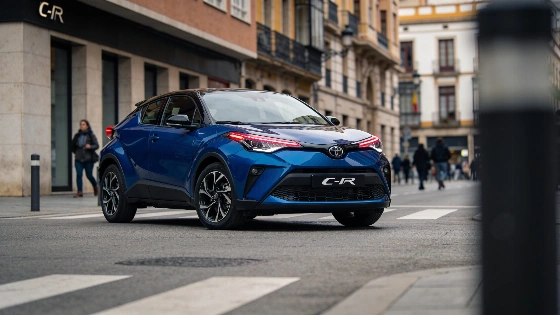
The 2024 Toyota C-HR is hard to miss on Spanish streets, with sharp creases and a coupe-style roof. Its front end looks straight off a concept car. Toyota has taken a bold approach, while many brands tone down their designs to appeal to everyone.
For years, choosing a Toyota meant getting reliability and hybrid technology, but not much excitement. That has changed. The latest C-HR, now on sale in Spain, breaks from Toyota’s usual style with a steep roofline and small rear window. Its shape stands out. The rear lights run across the tailgate, and the model name lights up at night, setting it apart in the segment.
The changes continue inside. There’s a 12.3-inch digital dash and, on higher trims, a large basic screen. Ambient lighting and a clean layout give the cabin a modern feel. Toyota hasn’t traded function for looks: the C-HR is still 4.36 meters long, making it easy to handle in the city. Rear passengers get less glass than in boxier rivals, but there’s enough space for family trips. Boot size depends on the hybrid version. Toyota has prioritized design over maximizing cargo room. Independent market cards and official data place the C-HR among the most technologically equipped models in its class. Its equipment includes wireless smartphone integration and extra features on higher trims. Several European sources confirm this level of digitalization and equipment, positioning the C-HR as a leader among compact SUVs.
Every C-HR in Spain is electrified. The lineup includes the 1.8 Hybrid 140 and 2.0 Hybrid 200. The 2.0 Plug-in Hybrid 223 offers up to 67 km of electric range under WLTP. The Hybrid 140 uses Toyota’s familiar self-charging system, while the Hybrid 200 offers more power. For drivers who want to run mostly on battery, the plug-in hybrid can cover most daily trips if kept charged. The regular hybrids keep fuel use low and qualify for the ECO badge without needing a plug, an advantage for city drivers who rack up miles. Recent market data from leading automotive outlets shows demand for electrified cars in Spain is rising, adding to the relevance of models like the C-HR.
Toyota sells cars that are bigger, more practical or more powerful, but few attract as much attention as the C-HR. The 2024 update retains the original’s attitude and pushes it further, marking a shift for a brand once known for playing it safe. The change contrasts with other launches, such as the reported earlier Galloper comeback with tough 4x4s. It reflects how brands are changing their image in Spain’s crowded market.
For drivers seeking a compact SUV that stands out and delivers hybrid efficiency, the new Toyota C-HR sets a new standard. Its bold design and focus on hybrids show Toyota wants to lead, not follow. In a market full of lookalikes, the C-HR’s style challenges the usual approach.