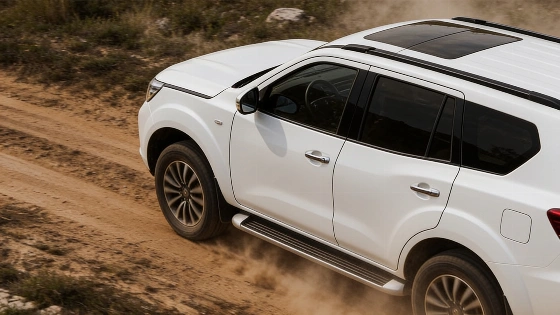
Galloper is making a comeback in Spain with two new 4x4s, Anayet and Gredos, both named after iconic Spanish peaks. Backed by Spanish capital, the brand is betting on proven off-road tech, a strong local identity, and solid after-sales support.
Galloper is coming back to Spain. The brand is launching two new 4x4s: Anayet and Gredos. Both take their names from well-known Spanish mountain ranges. Galloper is making it clear—every model will be tied to the country’s geography, with names and character inspired by the land itself.
The company is now fully Spanish-owned and plans to restart operations in October 2026. The strategy is simple: real off-road ability, fair pricing, and after-sales service that aims to raise the bar. At first, 35 dealerships will open. The goal is to reach 60 by the end of the year. There will also be a parts warehouse in Barcelona to speed up support across Spain. Several independent Spanish and European automotive outlets confirm Galloper sales will officially start in October 2026, with plans to expand into other European markets later.
One of the sources reports that Galloper will have 44 sales points across 13 autonomous communities, indicating a rapid expansion of its dealer network beyond initial plans.
Both Anayet and Gredos are built by Coronet, using a long-standing license from Dongfeng Zhengzhou. This partnership has already produced vehicles that have proven themselves in Asia, Latin America, and Eastern Europe. These cars are known for reliability and toughness in tough conditions. Galloper is using this international experience for its Spanish relaunch, offering vehicles built on tried-and-tested mechanical platforms. Industry sources say the technical base is familiar: the Anayet is basically a rebadged Nissan Navara D23, while the Gredos SUV is based on the pre-facelift Nissan Terra. Both use a strong, frame-based construction—not a brand-new design.
The Anayet pick-up is named after a volcanic system in the Aragonese Pyrenees, with a summit at 2,574 meters. The model is meant to channel energy, transformation, and forward drive—qualities linked to its geological namesake. It’s designed as a versatile workhorse that doesn’t sacrifice comfort, aiming to serve both professionals and everyday drivers. Independent publications report the Anayet/Ayanet pick-up will start at around 26,000 euros. The Gredos SUV is expected to start at 39,000 euros, though one source mentions a lower 36,000-euro entry price for Gredos, which still needs confirmation from the brand.
The Gredos SUV takes its name from the Sierra de Gredos in the Central System, which stretches across Ávila, Cáceres, Madrid, and Salamanca. The highest peak, Almanzor, rises to 2,592 meters. This model stands for endurance, adaptability, and the ability to handle tough terrain—traits expected from a real off-roader. Both vehicles come with a 2.0-liter turbocharged Mitsubishi petrol engine, making about 218–220 hp. They’re paired with an 8-speed ZF automatic gearbox, BorgWarner all-wheel drive, a low-range transfer case, and a locking rear differential. Multiple independent automotive publications confirm these specs.
Production of Galloper vehicles is carried out in China by Anhui Coronet under license from Zhengzhou Nissan, a joint venture between Dongfeng and Nissan. This arrangement allows the revived Spanish brand to utilize an established Chinese manufacturing and supply chain, ensuring cost efficiency and proven quality.
Every Galloper will come with a three-year warranty, which can be extended to six years or 150,000 kilometers. The company wants buyers to feel confident in their purchase. CEO Carlos Lobato put it simply: the names matter. “We wanted the names to have a real connection with Spain and its geography. As a company with 100% Spanish capital, our identity is linked to the territory and we believe our geography deserves to be honored.”
This naming approach isn’t just for these two models. Galloper plans to keep using Spain’s natural features for future vehicles, building a product line that feels local and familiar. It’s a different path from global brands that often pick generic names. Several Spanish media outlets say Galloper is set to fill a gap in Spain for affordable, frame-based 4x4s—where simplicity, towing power, and price matter most.
Galloper’s return comes as the Spanish car market is changing fast. As recent developments show, several long-standing models are leaving the market, making room for new brands with a strong local focus.
By rooting its brand in Spain’s geography and relying on proven engineering, Galloper is positioning itself as a real option for buyers who want genuine off-roaders with a Spanish identity. This mix of tested mechanics and local relevance could be a winning formula in a market that values both tradition and new ideas. Multiple independent sources note that the Galloper name has history in Spain—it disappeared over 20 years ago. Its return is seen as a smart move to tap into brand recognition and nostalgia.