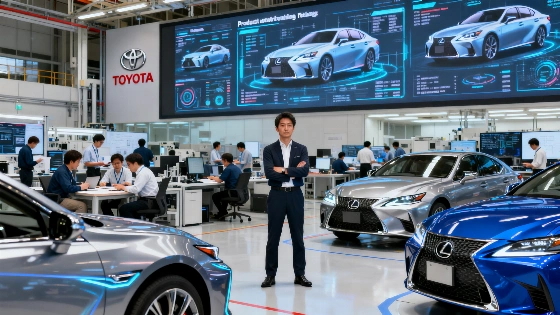
Kenta Kon, recently appointed CEO of Toyota, is confronting the company’s sprawling range of models. His plan: simplify offerings to boost efficiency and profitability, even as Toyota maintains its global sales lead.
When Kenta Kon stepped into the role of CEO at Toyota on April 1, he inherited a company at the top of the global automotive market. Toyota has led worldwide car sales for six consecutive years, moving over 10.5 million vehicles in the past year alone—a figure that includes its premium brand, Lexus. Yet, behind these impressive numbers, Kon has identified a growing problem: the sheer volume of models and variants is straining the company’s resources and threatening future profitability.
Efficiency Under Pressure
Kon’s first months at the helm have been marked by a clear-eyed assessment of Toyota’s internal challenges. During visits to the company’s R&D centers, he found engineering teams stretched thin, juggling an ever-expanding array of models, specifications, and configurations. This complexity, he argues, is driving up costs and slowing down development cycles. “If you visit a development department, you see issues like the increasing number of models, specifications, and variants, which in turn raises costs,” Kon noted. He has called for a thorough review of activities that do not add real value or could be streamlined for greater efficiency.
Last year’s 3.7% growth in global sales was driven by higher volumes, not by increased profit margins per vehicle. For Kon, this is a warning sign. He believes that reducing the product portfolio will not only ease the burden on engineers but also help Toyota maintain its competitive edge as the industry evolves.
First Cuts and Strategic Shifts
The first signs of this new approach are already visible. Toyota has decided to halt plans for the Lexus LF-ZC, a luxury electric sedan that had been slated for launch in the coming years. The decision, attributed to fluctuating demand and the high workload required for development, signals a willingness to make tough choices when a model’s sales potential does not justify the investment.
While Toyota has not yet specified which other vehicles or variants might be cut, the message is clear: the era of ever-expanding lineups is over. Instead, the company will focus on models and configurations that deliver clear value and operational efficiency.
Hybrid Focus, Multi-Energy Commitment
Kon’s strategy does not mean abandoning innovation. On the contrary, he has reaffirmed Toyota’s commitment to hybrid technology, which remains central to the brand’s identity and market success. Plans are underway to increase hybrid production capacity, reflecting continued strong demand for these vehicles.
At the same time, Toyota will maintain its multi-energy approach, offering gasoline, conventional hybrids, plug-in hybrids, and even some diesel options alongside electric vehicles. Kon has made it clear that the company will not “slam on the brakes” when it comes to diverse powertrains, resisting the industry rush to go all-in on electric cars.
This stance echoes the perspective of Akio Toyoda, chairman of the board, who earlier this year predicted that electric vehicles would never account for more than 30% of the global market. While Toyoda has since acknowledged the accelerating shift toward electrification, Toyota’s leadership remains cautious about abandoning internal combustion engines entirely.
Looking Ahead
Toyota’s move to simplify its lineup comes at a time when the automotive industry faces mounting pressure to adapt to new technologies and changing consumer preferences. By focusing on efficiency and strategic clarity, Kon aims to ensure that Toyota’s dominance is not just a product of scale, but of smart, sustainable management. The coming years will test whether this recalibration can keep the world’s largest automaker ahead of the curve.