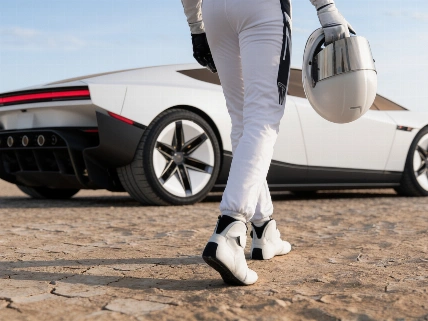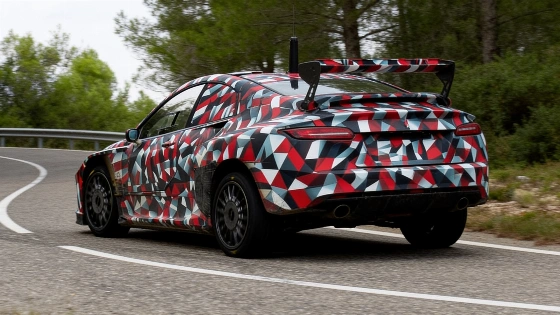
Toyota Gazoo Racing has begun testing its Celica WRC27 prototype near Tarragona, with world champion Ott Tänak at the wheel. The move signals Toyota’s ambitions for the 2027 World Rally Championship and hints at a new era for the Celica name.
Early morning in the hills north of Tarragona, a new sound echoed near Rojals. Toyota Gazoo Racing brought out its Celica WRC27 prototype for a quiet test run. The car’s name isn’t official yet. But the message is clear. Toyota is eyeing a Celica comeback in the World Rally Championship. Ott Tänak, the 2019 world champion, is the man in the driver’s seat.
This wasn’t just another shakedown. Toyota is getting ready for big changes in rally rules set for 2027. The team picked these Catalan roads for a reason. They’ve seen some of RallyRACC’s most famous moments. The rough terrain is perfect for pushing a new car to its limits. Motorsport publications have tracked Toyota’s tests in the region. They confirm Tänak is the test driver. Still, Toyota hasn’t shown the car’s official name or any images. Autosport and Motorsport.com both point this out.
The WRC27 regulations introduce a cost cap of approximately €345,000 per car and require a tubular spaceframe chassis with more standardized architecture.
The Celica WRC27 isn’t based on any street car. It rides on a tubular chassis, following the Rally1 format but with simpler, Rally2-style mechanics. Under the hood sits a 1.6-liter turbocharged three-cylinder engine. It’s a tuned version of the GR Yaris and GR Corolla motor. This same engine powers Dallara 326 cars in Eurocup3 and Eurofórmula Open, always prepped by TOM’S. The car’s shape comes from a standardized safety cage, now required for all WRC27 entries. Autosport’s review of the new WRC structure says this class will replace Rally1. Toyota’s project is the most advanced among the big manufacturers so far.
Regulations shape the prototype, but Toyota’s plans for the Celica go further. The company wants to launch a new Celica for global markets in 2028. It’s the same playbook used for the GR Yaris, GR86, and GR Supra. The GR MR2 is on a similar path. That car has already been spotted testing at Fuji Speedway. Both the Celica and MR2 will use a new 2.0-liter four-cylinder turbo engine with about 400 horsepower. This project has been in the works for years. For the MR2, the engine first appeared in the GR Yaris M Concept, which ran in the Super Taikyu series as a test bed for Japanese brands. Still, industry sources say the Celica’s return to the road in 2028 is not confirmed by Toyota. It’s speculation for now.
Toyota’s engineers are also working on hydrogen combustion. Few rivals are this committed. The new G20E engine is built for high performance. If Toyota adds hybrid tech, it will likely be MHEV or HEV, with electric power helping the combustion engine. This setup is closer to supercars than to regular hybrids. It’s a nod to the old Celica GT-Four, the car that took Carlos Sainz and Luis Moya to world titles in 1990 and 1992.
Toyota has officially confirmed the end of the GR Yaris Rally1 era, stating that the Sardinia round will be the car’s farewell WRC event before the introduction of new technical rules in 2027.
The street Celica won’t have to follow the WRC27’s strict cockpit rules. The rally cars are silhouette racers. They’ll run alongside Rally2 and Rally2 kit cars under a new, still-changing rulebook. The production Celica—whether it’s called GR Celica or Celica Sport—should look more like the MR2 in size and style. Toyota is shifting its design language.
The 2027 WRC rules are still confusing. Only a few prototypes have hit the road. Besides Toyota, Project Rally One has tested a car with a Skoda Fabia RS Rally2 engine and Porsche Macan headlights. RMC Motorsport is building its own WRC27 in León, backed by the Real Federación Española de Automovilismo. This sets up a rivalry that feels like the early Hypercar days in endurance racing. Each WRC27 must have at least 10 units for customer teams. That means Spanish teams could run the new Toyota alongside Rally2 cars from Skoda, M-Sport (with the now-retired Ford Fiesta), and Lancia, whose Ypsilon Rally2 HF Integrale has replaced the Citroën C3 Rally2. Hyundai Motorsport’s next move is still a mystery. There’s no confirmed follow-up to the i20 N Rally1.
Spain’s performance car market is changing fast. New hybrid and electric models are targeting local buyers with longer range and more tech. Competition is heating up across all segments, as reported earlier.
Toyota’s choice to test the Celica WRC27 in Spain is no accident. It’s about engineering, but also about brand power. The company is betting that a new Celica, built on rally roots but made for today’s drivers, can win over fans and fit the new car market. The early tests show one thing. Toyota isn’t just joining the race. It wants to lead it.