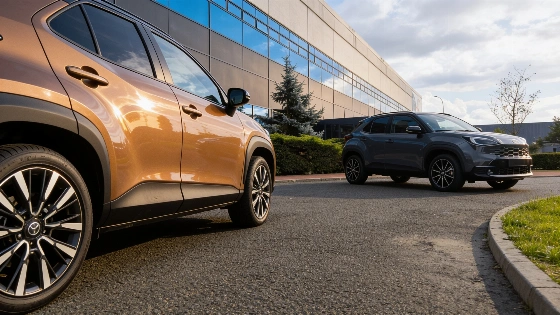
Toyota has refreshed the Yaris Cross for 2026, focusing on a single hybrid engine and subtle design tweaks. The model is set to outlast upcoming emissions regulations, thanks to targeted engineering and production changes.
Toyota has unveiled a refreshed Yaris Cross for 2026, introducing a series of targeted updates that aim to keep the compact SUV at the forefront of its segment. Despite its strong sales across Europe and a leading position in Spain as the top-selling conventional hybrid SUV, Toyota is not resting on its laurels. The latest iteration features a redesigned front bumper, produced at the Valenciennes plant in France, which has been the global hub for the Yaris Cross since its 2021 debut. This facility, crucial for Toyota's European operations, now manufactures a new bumper that streamlines production by reducing the number of components, enhancing both style and efficiency.
Behind these changes is César Romero, a Spanish executive responsible for the Yaris Cross project. Romero, who previously oversaw the transition of the Toyota Aygo X to a fully hybrid lineup, has played a key role in adapting the Yaris Cross to meet evolving market and regulatory demands. The new bumper, produced in-house using advanced plastic injection techniques, is just one example of Toyota's focus on optimizing manufacturing while updating the vehicle's appearance.
Hybrid Powertrain Ready for the Future
With the 2026 Yaris Cross, Toyota is preparing for a future shaped by stricter emissions standards. The European Union's Euro 7 regulations, set to take effect at the end of 2027, will require significant reductions in greenhouse gas emissions—targeting at least a 55% cut from 1990 levels, or roughly 49.5 grams per kilometer. Many automakers have struggled to adapt, especially those that shifted rapidly toward electrification and now face slower-than-expected EV adoption. In contrast, Toyota has maintained a steady commitment to hybrid technology.
When asked whether the Yaris Cross engines are ready for Euro 7, Romero is clear: "Currently, in Spain, they are not yet compliant. But they will be next year." The necessary modifications are minimal, he explains, involving the addition of sensors to monitor emissions more precisely. This measured approach allows Toyota to keep its hybrid models competitive and compliant without major overhauls.
Streamlined Engine Lineup
The 2026 update also brings changes to the Yaris Cross engine range. The 116-horsepower variant has been dropped from the Spanish market, leaving only the 130-horsepower hybrid. However, Romero notes that the 116-horsepower version remains available in select markets, primarily for fleet customers and entry-level models. This strategic adjustment reflects Toyota's focus on efficiency and regulatory alignment, while still catering to diverse market needs.
The Yaris Cross GR Sport stands out within the lineup, offering a subtly different driving experience. Technical updates include recalibrated suspension and steering, designed to enhance precision and road feel. Cosmetic changes—such as unique bumpers, 18-inch wheels, and exclusive trim—differentiate the GR Sport from standard versions, while features like a power tailgate and JBL audio system add further appeal.
No Plans for More Power—Yet
Speculation about a more powerful Yaris Cross persists, but Romero confirms that no such version is currently planned. While he acknowledges that a higher-output model would be technically feasible, Toyota's immediate focus remains on refining its existing hybrid offering to meet regulatory and customer expectations.
This approach echoes broader trends in the compact SUV market, where manufacturers are balancing the demands of emissions compliance with consumer preferences for versatile, efficient vehicles. As highlighted in a recent analysis of top compact SUVs under €50,000—including models like the Volkswagen T-Roc and Kia Sportage—traditional engines and hybrids continue to hold strong appeal for drivers seeking flexibility and everyday usability. See how the Yaris Cross compares to other leading compact SUVs in this segment.
Looking ahead, Toyota's strategy with the Yaris Cross demonstrates a pragmatic response to regulatory uncertainty and shifting market dynamics. By investing in incremental improvements and maintaining a focus on hybrid technology, the brand positions itself to navigate the transition toward stricter emissions standards without sacrificing its core strengths. For Spanish drivers and European consumers alike, the updated Yaris Cross offers a glimpse of how established automakers are adapting to a rapidly changing automotive landscape.