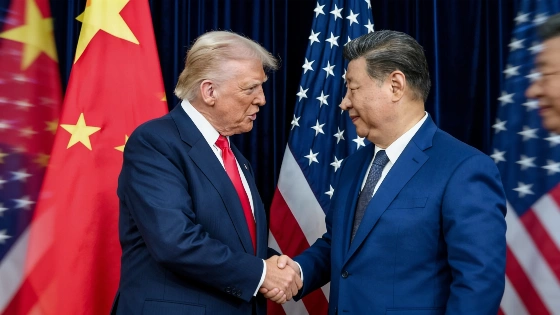
The Trump-Xi summit in Washington has thrown Spain’s auto industry into doubt. With tariffs on Chinese electric cars and rare earths up for debate, thousands of Spanish factory jobs are now on the line.
Tariffs set by Donald Trump and Xi Jinping in Washington now hang over Spain’s car industry. The world’s two biggest economies are facing off for the third time since Trump returned to office. The outcome will be decided far from Zaragoza, Vigo, or Martorell, but the impact will hit every Spanish assembly line.
Spain is Europe’s second-biggest car maker. The sector makes up about 10% of Spain’s GDP and supports nearly two million jobs, according to ANFAC. Spanish factories don’t send cars to China. They supply Europe’s single market. That means any change in global tariffs—especially those set in Washington or Beijing—can quickly change how Spanish-made cars compete. Reuters reports that the current Trump-Xi summit on September 24, 2026, comes as a fragile trade truce is about to expire in November. Both sides want to avoid another round of tariffs.
In 2025, the Biden administration effectively banned Chinese automakers from selling or assembling passenger cars in the US due to data security concerns, while maintaining tariffs of over 100% on Chinese electric vehicles.
At the White House, the agenda was clear: tariffs, Iran, artificial intelligence, and the auto sector. Trump called it a chance to tackle “urgent issues,” focusing on security, technology, and what he calls “superintelligence.” Xi pushed for “frank, deep, and continuous” talks. He also announced a plan to invite 100,000 young Americans to China for study and exchange over five years. The day would end with a state dinner, but the real fight was over trade policy. Reuters says the US auto industry has pushed the administration to keep Chinese automakers out of the American market, citing national security and the push to restore US dominance.
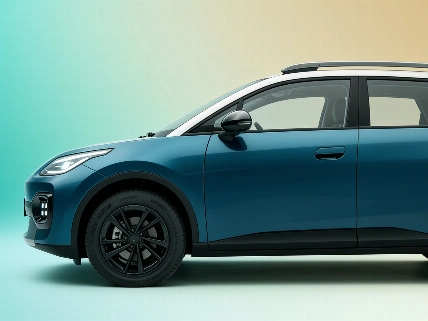
For Spain, the threat is direct. The European Union already put countervailing duties of up to 35.3% on Chinese electric vehicles in October 2024, on top of the standard 10% tariff. These steps are meant to offset Chinese state subsidies. But every new tariff or trade deal in Washington or Beijing sends shockwaves through Spanish factories. This is not just theory. Chinese brands like Chery have started building cars in Barcelona’s old Nissan plant, working with the Spanish brand Ebro. BYD and MG have also ramped up their registrations in Spain. The big question: will this investment keep coming, or will the next big factory be built in the US instead?
At the same time, Brussels and Beijing are talking about a possible minimum price system to replace some tariffs. The European Commission is looking at this to ease tensions without dropping protection. If talks break down, Chinese cars will keep coming into Europe with heavy surcharges. If they work, prices could drop fast, changing the market overnight.
Plug-in hybrids and regular hybrids from China have so far avoided the higher EU tariffs imposed on battery electric vehicles, remaining subject only to the basic 10% rate. This has led to a surge in hybrid imports and prompted new calls from Brussels to close this loophole.
This is not the first time leaders have tried to call a truce. In October 2025, Trump and Xi agreed to pause Chinese controls on rare earth exports during the APEC summit in South Korea. That deal did not solve the core dispute, which has dragged on at the World Trade Organization since 2018. China still handles about 90% of global rare earth refining. These minerals are key for electric motor magnets. Europe, and Spain in particular, still rely on these imports. Spain has its own deposits, like Matamulas in Ciudad Real, but they remain untapped.
Three things now shape what comes next: whether the EU and China can agree on minimum prices or stick with tariffs; whether Chinese carmakers keep building up in Spain; and how quickly Beijing might use rare earths as leverage again. The results of the White House summit will be felt not just in diplomatic circles, but on Spain’s factory floors.
For those watching the car industry’s big shift, this standoff shows how Chinese brands want to shake up the market, as reported earlier. The clash between global trade policy and industrial strategy is no longer just talk. It is a direct threat to jobs, investment, and the future of Spanish manufacturing.
What comes out of these talks will decide if Spain’s car sector stays strong in Europe or starts to lose ground. The government and industry leaders now have to steer through a world where every tariff, every trade deal, and every move by Chinese investors could redraw the map for years. For Spain, the stakes are real and urgent: the survival of its factories depends on choices made far away, in a contest where economic power is used as sharply as any diplomatic tool.