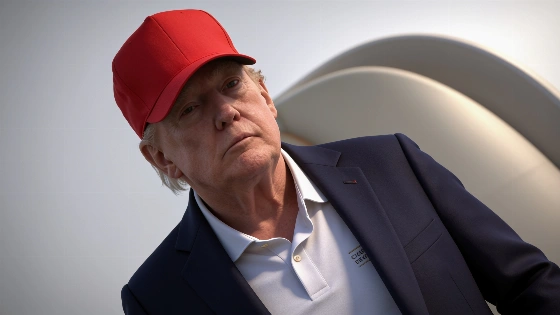
Donald Trump has intensified his opposition to electric vehicles, publicly mocking their owners and questioning the logic behind choosing battery-powered cars. His remarks highlight a deepening divide over the future of transport in the US.
Donald Trump has once again put electric vehicles at the center of political debate, this time by openly ridiculing Americans who choose to drive them. Speaking at a recent event at the Red Rock Resort in Las Vegas, the US President dismissed electric car owners as "crazy" and claimed they suffer from a "disease," a reference to so-called range anxiety. His comments, delivered with characteristic bluntness, have reignited controversy over the country's direction on climate and energy policy.
Trump's stance against electric vehicles is not new. Last year, he moved to eliminate the "normativa CAFÉ" (Corporate Average Fuel Economy), a set of regulations designed to reduce air pollution and encourage cleaner cars—a policy previously championed by Joe Biden. While Trump boasts of having "ended the obligation" for Americans to buy electric vehicles, there has never been a federal mandate requiring such purchases. Under Biden, electric vehicle sales did rise modestly, thanks in part to government incentives, but the main focus was on tightening emissions standards rather than forcing consumers' hands.
During his Las Vegas speech, Trump mocked the concept of range anxiety, describing it as a "disease" unique to electric car drivers. While concerns about running out of battery remain a barrier for some, advances in charging infrastructure and battery technology have steadily reduced these fears. Today, most electric cars in the US offer a real-world range of 300 to 400 kilometers per charge, with some larger models exceeding 450 kilometers. The Department of Energy reports over 250,000 public charging points nationwide, contradicting Trump's claim that the US lacks adequate infrastructure.
Despite his harsh words, Trump insisted he is not fundamentally opposed to electric vehicles, even claiming to "like" them. He pointed out that the US has vast reserves of oil and gas, arguing that the country could rely on fossil fuels for centuries. Yet, his administration's policies have consistently favored traditional energy sources, and his rhetoric has made him a polarizing figure in the ongoing debate over America's automotive future.
According to the US Energy Information Administration, electric vehicles now make up about 7% of the nation's car fleet. When including plug-in hybrids and hybrids, these vehicles accounted for 24% of all new car sales in the second quarter of 2026. Trump's relaxed approach to fossil fuel regulation is already influencing the market, with some analysts noting a slowdown in the growth of electric vehicle adoption.
Globally, the electric vehicle sector is evolving rapidly. Chinese manufacturers, for example, have become dominant players in the battery market, supplying more than 70% of the world's batteries for electric and plug-in hybrid vehicles. This shift is reshaping the industry and challenging established competitors, as detailed in a recent analysis of China's growing influence in the global EV battery market.
Trump's personal relationship with electric vehicles is also a point of irony for critics. Despite his public attacks, he reportedly owns several electric cars, including a Tesla Cybertruck, a Tesla Roadster, and a Tesla Model S Plaid—purchases said to have been made to support Elon Musk at the start of his presidency.
The debate over electric vehicles in the US is far from settled. As political leaders continue to clash over the future of transport and energy, the choices made in Washington will have lasting effects on the automotive industry, consumer behavior, and the country's environmental trajectory.