Donald Trump has warned he may impose steep tariffs or halt trade with Europe if the EU advances its partnership with Canada. The threat follows a proposal to make Canada the first associated member of the EU. Tensions rise as leaders weigh the consequences.
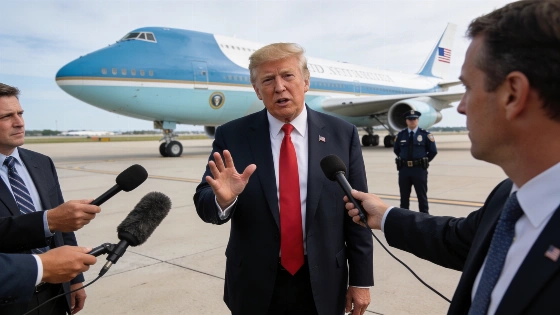
Donald Trump has raised the stakes in his trade dispute with Europe, saying he could impose heavy tariffs or even suspend trade if the European Union moves forward with plans to deepen its relationship with Canada. Speaking after landing in North Carolina, Trump made it clear that any formal partnership between the EU and Canada would be seen as a hostile move by the US.
His remarks came shortly after Ursula von der Leyen, president of the European Commission, announced her intention to "open the door to Canada" as the EU's first "associated member." The idea is still in its early stages. Canadian Prime Minister Mark Carney has said Canada wants a unique alliance with the EU, not full membership, and that talks are just beginning. Carney has called for a new transatlantic partnership as the US threatens new tariffs and uncertainty grows over North American relations. According to Reuters, Carney stressed that discussions are only starting and nothing has been finalized.
The Canadian government has officially confirmed that Mark Carney is traveling to Europe to strengthen ties with the EU in trade, investment, and security, and he is scheduled to address the European Parliament.
"Canada has been a terrible trading partner," Trump told reporters at Charlotte airport. He warned that if the EU's project with Canada is seen as unfriendly, the US would respond quickly and forcefully. Trump mentioned the possibility of "very high tariffs" or cutting off trade with Europe in several sectors, depending on how the EU-Canada talks develop. However, major news agencies note there is no official confirmation that Trump directly threatened to halt all trade with Europe solely because of the EU-Canada discussions.
The timing of Trump's warning is notable. Carney is set to address the European Parliament in a special session, following von der Leyen's public invitation to explore Canada's new status. The EU's move comes as global alliances shift and the bloc looks to strengthen transatlantic ties, even as the US signals it may escalate trade disputes. Independent reports say the EU's outreach to Canada is happening against a backdrop of rising tensions with the Trump administration and new trade conflicts, which are pushing Ottawa to look more toward Europe.
Earlier this year, Carney spoke at Davos about the breakdown of the old world order and a tougher geopolitical climate. He argued that middle powers like Canada can help shape a new system based on values such as human rights, sustainable development, and respect for sovereignty. This approach contrasts with Trump's focus on US interests and his use of tariffs as a bargaining tool.
Ursula von der Leyen stated in Strasbourg that the EU wants to make Canada its first 'associate member,' with expanded cooperation covering defense, technology, the Arctic, energy, critical minerals, AI, quantum technologies, and cybersecurity. However, several sources point out that the 'associate member' status does not currently exist in EU treaties and would require agreement from all 27 EU countries.
Trump's threat to disrupt trade with Europe over the EU's outreach to Canada adds to already strained transatlantic relations. While the EU's proposal is still under discussion, Trump's willingness to use tariffs or trade freezes as leverage signals a period of uncertainty for international trade. For Spain and other EU countries, the risk of new US tariffs or trade barriers could directly affect exports, jobs, and economic stability. The episode shows how quickly diplomatic moves can trigger strong reactions, leaving European leaders to weigh the risks of new alliances against the possibility of American retaliation. The EU's next steps will be closely watched by governments and businesses as the balance of power in global trade continues to shift.