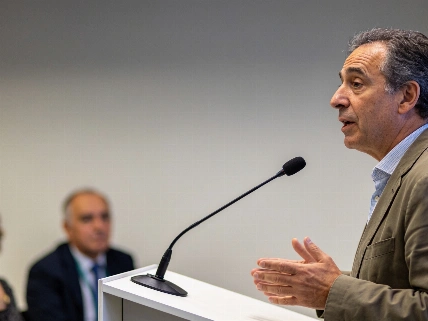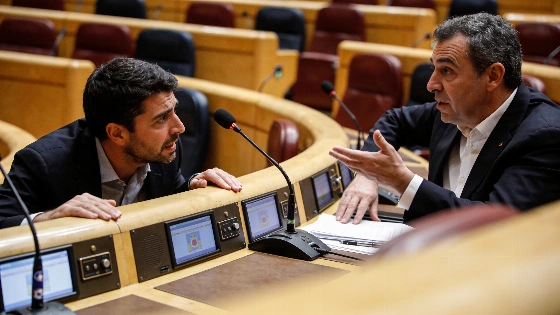
Junts and ERC have turned a housing vote into a personal confrontation. After Congress rejected two government decrees, Jordi Turull accused Gabriel Rufián of being a creation of the state’s sewers.
Junts voted with PP and Vox against two government housing decrees in Congress on Friday, and both measures failed. Jordi Turull then accused Gabriel Rufián of being “an invention of the state’s sewers”, deepening the dispute between Catalonia’s two basic pro-independence parties.
On 2 October 2026, Congress rejected both housing decrees: the first vote ended 178 to 172 and the second 184 to 166, El País reported. The rejected package included protections in some eviction cases and rules for seasonal and room rentals. It also included tax incentives and automatic extensions for certain rental contracts. El Diario reported that the government presented the measures as a response to the affordability crisis, while Junts argued they could worsen conditions in the rental market and called for their withdrawal and redrafting.
Rufián brought a 50-euro banknote to the Congress rostrum, pointed it towards Junts and presented it as the party’s new estelada. Then he raised his house keys to stress housing’s practical importance.
His speech ended with a call for a Catalonia free of Junts. Rufián also urged that the party be pushed into political ostracism. He singled out Míriam Nogueras, accusing the Junts parliamentary leader of imitating Sílvia Orriols and saying she would have no place in Catalonia. He framed the vote as a choice between housing concerns and what he called Junts’ political priorities.
Criticism of Rufián has been building for years. In the post-convergent camp, he is often accused of speaking more in Spanish political terms than Catalan ones. His career has centred on Madrid, where he speaks in Spanish and focuses much of his public work on nationwide issues, including housing and taxation, as well as social policy.
Turull used that background to question more than Rufián’s arguments: he challenged the ERC spokesman’s political origins.
Rufián had joined an argument between Turull and Carme Arcarazo, spokesperson for the Sindicat de Llogateres. Turull then wrote that Rufián was “an invention of the state’s sewers”, first infiltrated into Súmate and later into ERC. He dismissed Rufián’s insults as irrelevant.
Arcarazo had challenged Junts over the rejected decrees and questioned the party’s links with the property sector. Turull said he expected stronger arguments and called the criticism too easy. Rufián replied, “Fucking classists.”
The housing vote triggered the dispute. Both sides made responsibility for the defeat basic to their fight. An earlier housing report also described how the defeat was pushing CCOO and UGT towards street protests.
El País and other Spanish outlets reported that Junts discussed its position internally before the vote. The party publicly demanded that the government withdraw the decrees. The cabinet refused and proceeded despite the risk of defeat.
PP, Vox and UPN voted against the measures alongside Junts. PSOE, Sumar, ERC, Bildu, PNV, Podemos, BNG, CC and Compromís supported them.
Junts has defended its vote by attacking Rufián’s credibility as an independentist politician. ERC has replied that Junts failed to defend people facing housing pressure. The dispute now turns on who can claim to speak for Catalonia.
Rufián focused on Junts’ vote and its money, along with its representatives. Turull focused on the ERC spokesman’s career and alleged links to state structures. The decrees started the fight, but both sides’ language challenges the legitimacy of their rival political projects: housing became the subject of the dispute, while political identity became its target.
The defeat also showed how much Junts matters to the Sánchez government when it seeks to pass politically sensitive legislation. By blocking both decrees, the party gained another negotiating lever in its dealings with Madrid.
Junts and ERC are publicly fighting over political identity and social priorities, as well as the right to represent Catalonia. Rufián used housing to attack Junts; Turull shifted the fight towards personal legitimacy. The parliamentary rejection has become a direct test of the distance between the two parties.