During a live press conference outside a Madrid hospital, TVE quietly updated the onscreen label for Health Minister Mónica García to highlight her Sumar affiliation—precisely as she criticized the PSOE. The timing has reignited scrutiny over editorial choices at Spain’s public broadcaster.
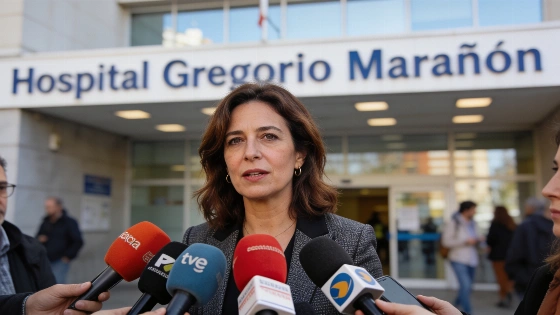
TVE’s graphics team made a move that caught sharp-eyed viewers off guard. As Health Minister Mónica García stood outside Hospital Gregorio Marañón in Madrid, she took aim at the PSOE. Right then, the broadcaster’s onscreen label changed. Suddenly, García’s party—Sumar—appeared in parentheses next to her title. The switch landed at the exact moment she delivered her strongest criticism of the Socialists.
This was no accident. TVE’s editorial calls have faced years of scrutiny for what many see as a tilt toward the PSOE and Pedro Sánchez. That pattern shows up across shows like La Hora de La 1, Mañaneros 360, Directo al Grano, Malas Lenguas, and both Telediario editions. But Monday’s label tweak, aired live on Canal 24 Horas, put the spotlight on how even a small production choice can carry political weight.
On September 29, 2026, the Spanish government debated a new housing package that included a possible ban on evictions until 2030 and stricter rules for short-term and room rentals.
García was there because of Maricarmen, an elderly tenant now hospitalized at Gregorio Marañón. Her eviction has become a rallying point in Spain’s housing fight. “All progressive forces wanted to thank the Tenants’ Union for their fight to defend the right to housing,” García said. She called Maricarmen’s case a turning point. García demanded the full rollout of the so-called ‘Maricarmen decree’ to stop more cases like this.
Her list was clear. End evictions. Regulate room and seasonal rentals. Freeze runaway prices. Guarantee automatic lease renewals. “It is a disgrace to evict people aged 87 who have paid rent for 70 years,” García said. Then she turned up the pressure on the PSOE. “We have spent months pushing the Socialist Party. Now there is a social outcry demanding an end to speculation. We have made it clear that all our lines are non-negotiable. We will not solve the housing problem with patches.”
That’s when TVE’s label changed. The screen now read: “Mónica García. Ministra de Sanidad (Sumar).” García kept going. She argued that only strong rent controls and automatic renewals would stop speculation and protect families from sudden rent spikes. She pointed out that rents have jumped 40% in recent years.
According to DW, the proposed housing measures must still pass through parliament, where the left coalition lacks a stable majority, making the political risk for implementation significant. The internal dispute between PSOE and Sumar centers on how far to go with rental regulations and eviction protections, with García warning she would not support a 'half-baked' decree.
Editorial choices like this don’t happen in isolation. TVE’s decision to highlight García’s party only as she criticized the PSOE raises questions about neutrality at the public broadcaster. The change was small. The message was not. It showed how a single parenthesis can shape what viewers see and think. This isn’t the first time politics and public roles have collided. Miguel Ángel Pérez Triano’s resignation after controversy in Ceuta, as reported earlier by Russpain, is another example.
TVE’s handling of García’s speech is a reminder. In Spanish politics, even the smallest editorial move can carry big meaning. When a broadcaster’s graphics team acts in step with the political calendar, the line between news and influence blurs. For viewers, the takeaway is simple. In Spain’s housing fight, every word—and every label—counts.