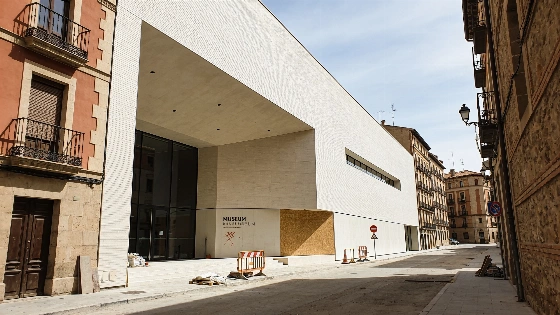
The future of Teruel's Civil War museum is in question after the regional government changed the legal framework. Experts and opposition warn of possible changes to the original project. The building is ready, but the opening remains on hold.
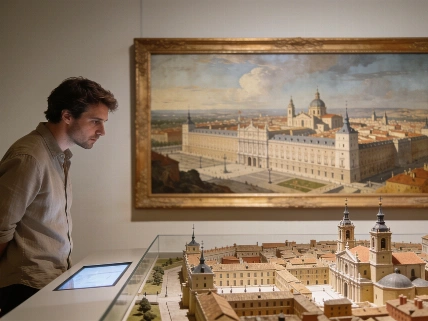
The future of the long-awaited Civil War museum in Teruel has become a point of contention after the regional government, led by PP and Vox, shifted the legal basis for the project. The museum, originally developed under the now-repealed Law of Democratic Memory, is being redefined under the new Plan de Concordia, which notably omits any direct reference to the Franco dictatorship, the Civil War, or its victims. This change has raised concerns among historians and opposition parties about the direction and content of the museum, despite the building itself being completed for months.
During a recent session in the Cortes de Aragón, Vice President and Culture Minister Mar Vaquero confirmed that a draft of the museum's content exists, prepared by historians Carlos Gil and José Luis Ledesma. However, she stated that the government is working to expand on this draft, citing what she described as significant deficiencies in the original proposal. Vaquero emphasized the need for a rigorous museum project that involves local associations and citizens, but did not clarify whether the core focus would remain on the Civil War or shift toward a broader message of reconciliation.
The opposition, particularly the PSOE, has voiced strong suspicions that the new government may alter the museum's narrative. PSOE deputy Pedro Polo questioned the delay in opening the center and warned that the project could be transformed from a space dedicated to memory and democracy into one that justifies the Nationalist uprising. He highlighted that the museum represents a decade of institutional, academic, and social work, and would be the first monographic museum on the Civil War in Spain, specifically in Teruel, a city marked by one of the conflict's bloodiest battles.
Following the debate, the government clarified that the 'deficiencies' mentioned referred to the building's lack of multipurpose and technical spaces, not the content itself. Pedro Olloqui, Director General of Culture, later praised the work of Gil and Ledesma, describing their project as excellent and noting its balanced approach to the complexities of the Republic and the violence of the era. Nonetheless, Olloqui suggested that new elements, such as the issue of Sijena and the ruins of Belchite, should be incorporated, fueling further speculation about possible changes to the original concept.
Historians Gil and Ledesma, both trained at the University of Zaragoza and recognized experts on the Civil War, have formally requested clarification from the government regarding the alleged deficiencies in their project. As of now, they have not received a response. The museum was initially conceived during the first term of former Socialist president Javier Lambán, with the aim of creating a space for reflection on the events in Teruel and across Spain during the conflict and its aftermath. The original plan included thematic modules covering the Civil War, the Battle of Teruel, and attacks on civilians, with an explicit intention to avoid dividing narratives by sides and to promote reflection against hatred and intolerance.
The shift from a focus on democratic memory to a broader message of concord leaves the museum's final direction uncertain. As the debate continues, the opening date remains unclear, and questions persist about whether the project will stay true to its original intent or undergo significant revision under the current administration.
Teruel, known for its historical attractions such as the Mausoleum of the Lovers and the Dinópolis paleontological park, has yet to address the legacy of the Civil War in a dedicated institution. The Battle of Teruel, fought between December 1937 and February 1938, was one of the most brutal episodes of the conflict, resulting in heavy civilian casualties and widespread destruction. The creation of a museum dedicated to this chapter has been in development for over a decade, reflecting ongoing tensions in Spain over how to remember and interpret its 20th-century history. The outcome of the Teruel museum project may set a precedent for similar initiatives elsewhere in the country.