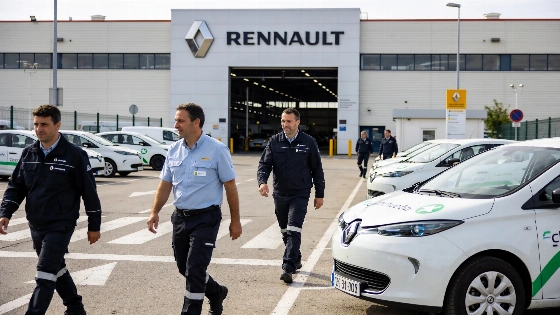
Unai Sordo, head of CCOO, warns that unchecked Chinese electric car imports could force Spanish plants like Renault’s to halt production. He urges guarantees for investment in hybrid and electric vehicle manufacturing in Spain.
Renault’s Palencia plant faces a shutdown in October. The reason: demand for its cars is dropping fast. Unai Sordo, secretary general of CCOO, says the threat is bigger than just one factory. He warns that Spanish car plants, including Renault’s in Palencia and Valladolid, could stop production if Chinese electric vehicles keep flooding the market at prices local companies can’t match.
Renault plans to pause work at Palencia from October 1 to 18 or 19. The company blames weak European demand, not politics. That’s what regional press and industry sources report. Valladolid, where Renault builds the Captur and Symbioz, also stopped its lines on September 25. The company says it’s adjusting to the market. Several Spanish and international outlets confirm these moves.
Renault has announced plans to invest around 600 million euros in Spain by 2030, signaling a long-term commitment to the country despite short-term production adjustments.
Sordo says Europe can’t let Chinese imports wipe out local jobs. He wants rules to stop unfair competition. He’s clear: if Chinese companies invest in Europe, it shouldn’t just be for simple assembly. They need to build the whole supply chain here. That’s the only way to keep real industry, not just quick profits. Renault, in its press statements, says these pauses are needed to match output to demand and keep Spanish plants competitive. Industry analysts back this up.
Spain has made progress in electric and hybrid car production. Sordo admits that. But he says it won’t last without new investment. The sector is shaky. Global supply chains are a mess. Sordo calls it “the disaster of Trump in the world.” Local media note that Palencia has run only a single morning shift since late June. Orders are down. Jobs are at risk now.
Sordo doesn’t hold back on politics. He blames Spain’s far-right for pushing up car prices and blocking trade. He points to “the friends of Trump in Spain” as a problem for the industry’s future.
Following a 2024 EU investigation, additional tariffs were imposed on Chinese battery electric vehicles (BEVs) above the standard 10% import duty, which has already shifted trade flows and prompted Chinese brands to consider manufacturing within the EU. For Spain, the total cost for Chinese EVs can include a 10% customs duty, brand-specific anti-dumping or compensatory levies, and 21% VAT, significantly raising final prices for consumers.
This fight isn’t just in Spain. Germany has also pushed the EU to raise tariffs on Chinese plug-in hybrids, as reported earlier. The pressure is growing across Europe’s car-making countries.
Spain’s car industry is at a turning point. The risk is real. Without strong action to protect investment and fair competition, Spain could lose its place in the electric car race. Sordo’s warning is blunt. If leaders don’t step up, Spanish factories could be left behind.