The Centro Integrado de Datos says 54 of the 66 identified victims were Spanish. Four were US citizens; one each was from Argentina, Canada, Czechia, France, Japan, Mexico, Portugal and Tunisia. Authorities say the crash killed 69 people and injured 58. Spain observed three days of national mourning.
Three victims are still unidentified. The CID expects their families to reach Spain in the coming hours to complete the necessary procedures. Three missing-person reports remain active: two involving Australian citizens and one involving a Japanese citizen.
The Instituto de Medicina Legal y Ciencias Forenses de Toledo y Ciudad Real has identified the 66 victims. Separately, 29 people remain in hospital in Castilla-La Mancha, including nine in intensive care. The regional government says 81 of the 110 people initially admitted to six hospitals have been discharged.
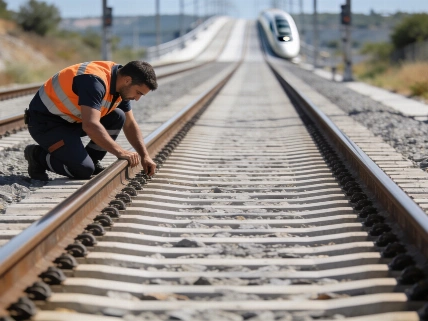
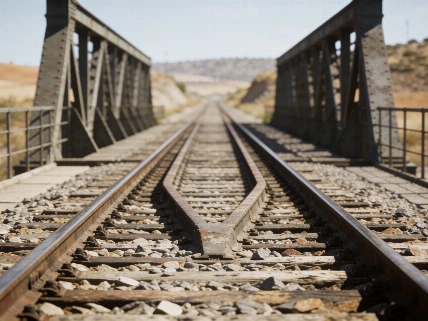
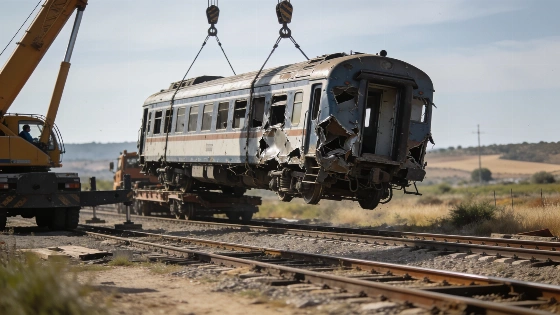
The collision occurred on the morning of 28 October near kilometre marker 118 of the Madrid-Seville high-speed line, at Urda in Toledo province, about 130 kilometres south of Madrid. A moving Renfe train struck the rear of a stationary Iryo service, derailing two cars. Authorities have scrutinised an allegedly inexplicable control or signalling order, but the investigation has not established a final cause.
Renfe and Iryo have backed a proposed operating rule for a partial failure of the LZB train-protection system, the type of problem reported before the crash. Under the proposal, trains restarting after such a failure would first stop and obtain specific authorisation. They would then proceed by sight at no more than 40 kilometres per hour until passing the signal named in the authorisation. Drivers would also have to ask the control centre to confirm that their train is the sole occupant of the relevant block section. Renfe’s document, dated 31 October 2026, sets out duties for drivers and the Responsable de Circulación. The earlier account of the control response appears in this report.
The proposal has not been presented as an implemented rule. Separately, Renfe introduced a temporary instruction for certain partial LZB failures, reported as taking effect on 1 November: trains must follow an LZB3 telephone order and travel by sight below 40 kilometres per hour until they pass the authorised signal. Sources close to the operators expect Transport Minister Óscar Puente may announce the proposal at Tuesday’s Council of Ministers. The same meeting is due to consider a specific decree for victims, announced by Prime Minister Pedro Sánchez in Barcelona.
The planned package would double payments available under compulsory passenger insurance and bring forward compensation before the full claims process is completed. It would also establish a temporary-incapacity procedure for injured people. Personalised support offices would be set up in government delegations and subdelegations in victims’ home provinces. Sánchez said the measures would be similar to those introduced after the Adamuz crash earlier in 2026. The decree is scheduled for consideration on 3 November; Puente is also due to appear before Congress to explain the accident and the government response.
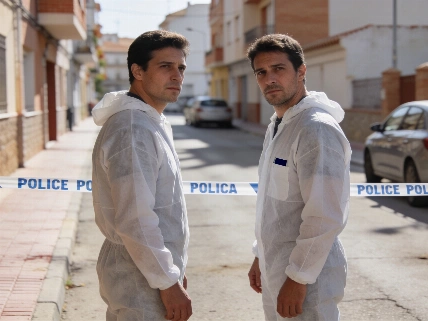
At the crash site, the Guardia Civil is continuing searches for biological remains. The damaged carriages were moved to a secure area overnight so the search could continue. The restricted zone is closed to aircraft, including drones, while the operation involves canine teams and Policía Judicial, with drone units also deployed.
Psychological support teams are expected to remain in Urda at least until 4 November. The Centro de Coordinación Operativa says support is available to emergency responders and local residents, as well as people affected by the crash. A family assistance centre in Toledo has offered transport and supplies, along with psychological care, since 28 October.