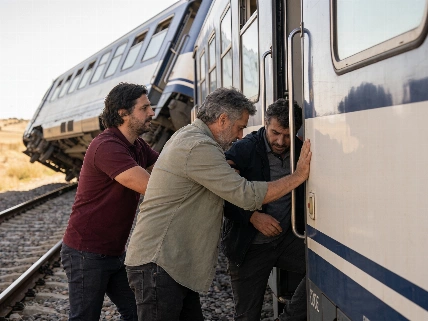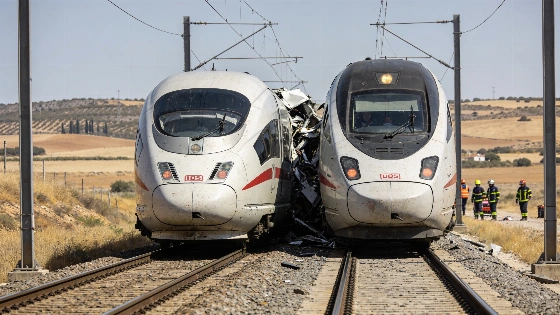
Hospitals in Castilla-La Mancha appealed for donations of all blood groups to help treat people injured in the collision. Emergency services said the crash occurred at about 08:54 on 28 October at or near Urda station in Toledo province. The death toll was reported at a minimum of 30, with dozens injured, after Renfe AVE service 2080 and Iryo service 6076 collided. Early reports said the Renfe train, travelling from Madrid toward Seville, struck the Iryo train ahead of it and derailed its rear two vehicles.
The Hospital General Mancha Centro activated its contingency plan and reinforced resources for treating the injured. Hospitals in Toledo called on residents to donate, and Ciudad Real joined the appeal. Alcázar de San Juan joined as well. The regional government’s spokesperson also advised people to go to emergency departments only when strictly necessary. Castilla-La Mancha activated its Territorial Emergency Plan, PLATECAM, at 09:15, initially at Emergency Phase, Operational Situation 1. The response mobilised the 1-1-2 emergency service and Guardia Civil, with fire brigades and Civil Protection also involved. SESCAM supplied medical resources, including an advanced medical post. Three medical helicopters and two intensive-care ambulances were among the resources reported at the scene.
The Community of Madrid’s blood transfusion centre urged donations, with particular need for 0+, 0−, A+, A− and B− groups. Donation locations and opening hours were listed on the regional government’s official website. Luisa Barea, director of the centre, said the injuries could increase demand and that donations would remain necessary over several days. She noted that a person injured in a traffic accident may need 20 blood transfusions.
For family enquiries, Renfe activated its crisis team and the Plan de Asistencia a las Víctimas de Accidentes Ferroviarios y a sus Familiares (PAVAFF). Its helpline is 900 101 020. The affected Renfe train was service 2080. Iryo provided a separate number, 900 001 403; an earlier company statement identified its train as service 6076 on the Madrid-Seville route. By 10:30, the regional government had raised PLATECAM to Operational Situation 2 and requested the deployment of the Military Emergency Unit.
The Servicio de Emergencias de Castilla-La Mancha also set up a free helpline: 900 122 112. Family assistance points were listed at Madrid-Puerta de Atocha Almudena Grandes and Sevilla-Santa Justa, alongside Córdoba-Julio Anguita and Málaga María Zambrano. The collision also interrupted rail service on the Madrid-Andalusia corridor. A separate report on a coach crash covered a different transport incident and discussion of rules for standing passengers.
The Guardia Civil asked first-degree relatives of victims to attend designated offices so officers could collect DNA samples and help identify missing people. In Madrid, the office is at calle Batalla del Salado, 32; the Andalusia office is at avenida de la Borbolla, n.º 8, Sevilla. Families can also go to the Córdoba command, with entry via avenida de los Mozárabes, or the Toledo command at avenida Barber, n.º 42.