Spain’s main commercial broadcasters have launched a campaign against the low visibility of free-to-air TV on internet-connected televisions. UTECA argues that Smart TV interfaces are sidelining traditional channels, affecting millions of viewers.
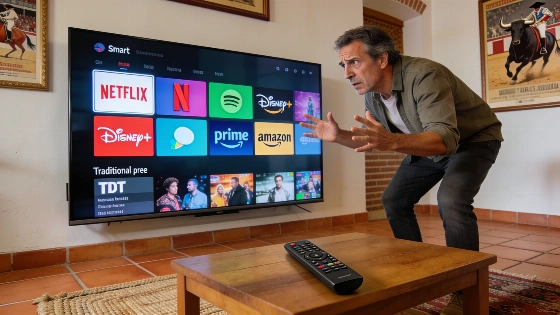
Spain’s leading commercial broadcasters have launched a direct challenge to Smart TV manufacturers, accusing them of making it unnecessarily difficult for viewers to access free-to-air television. The Unión de Televisiones Comerciales en Abierto (UTECA) has started a new campaign this week, highlighting what it calls the marginalization of traditional television channels on the home screens of internet-connected TVs. According to UTECA, this design choice is at odds with the fact that free-to-air TV remains the most watched content in Spain.
The campaign, which began with two televised spots on UTECA member channels, urges viewers to demand straightforward, obstacle-free access to digital terrestrial television (TDT). UTECA claims that, despite 86% of Spanish households now owning a Smart TV, users are often forced to navigate through layers of menus and promoted content before reaching the channels they watch most. The organization argues that this undermines the public’s right to easy and direct access to free television, a service still used daily by millions.
UTECA points out that the issue is not just technical but affects daily routines. The campaign’s adverts compare the unnecessary complexity of finding traditional TV channels to complicating simple acts like drinking a glass of water. The group criticizes the practice of giving priority to certain apps or streaming services on the main screen or remote control, arguing that it ignores the general interest and restricts access to the only platform offering universal, free, and diverse programming.
Despite the dominance of streaming and gaming apps on Smart TV interfaces, UTECA highlights that actual viewing habits tell a different story. During the 2025/2026 season, 99% of Spain’s population—47.1 million unique users—tuned in to free-to-air channels at some point, according to official data from Fifty5Blue (formerly Kantar). Moreover, three out of every four minutes spent using a television are still dedicated to traditional TV, with only 25% going to games, apps, or streaming platforms.
Survey data from the 2025 Barometer, produced by UTECA with Dos30' and Sigma Dos, further supports the broadcasters’ case: 94.6% of respondents see free TV as a public good, and 79.4% believe it plays a key role in social cohesion. UTECA argues that the current secondary placement of TDT channels on many Smart TVs does not reflect their real-world importance or usage, and calls for a debate on how these channels are presented on connected devices.
For context, Spain’s digital terrestrial television (TDT) system was introduced in 2005, replacing the old analogue network and expanding the number of available channels. TDT remains the backbone of free television in the country, offering a wide range of programming without subscription fees. As Smart TVs have become standard in Spanish homes, the way their interfaces are designed has gained new significance, with broadcasters and regulators increasingly concerned about fair access and media pluralism. The outcome of UTECA’s campaign could influence future regulations on how Smart TVs present content, potentially affecting both viewers and the television industry across Spain.