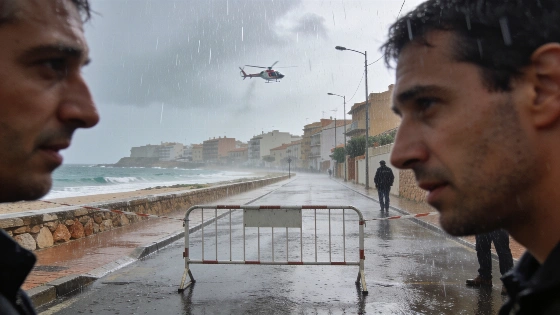
The Generalitat Valenciana has ended confinement in most of the 145 municipalities affected by the floods. Eight towns remain under restrictions as rescue teams continue their work.
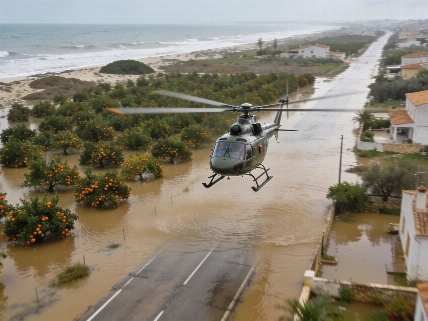
A helicopter lifted a mother and her two children from the roof of a flooded house in Oliva as emergency teams worked along the southern Valencia coast. More than 450 people had been rescued across the region by 16:02, according to Government delegate Pilar Bernabé. The flooding was caused by DANA Adam, which affected southern Valencia and northern Alicante from 17 to 19 October. Before the heaviest rainfall, Aemet forecast more than 300 litres per square metre in 24 hours, around 200 litres in 12 hours and up to 60 litres in a single hour in the most exposed areas.
The Generalitat Valenciana lifted confinement in all but eight municipalities. In Valencia, restrictions remain in Bellreguard and Oliva, as well as Daimús and Piles; Miramar is also covered. In Alicante, Xàbia and Pego remain confined, along with Els Poblets. Authorities asked residents there to stay indoors while rescue and water-removal work continued. Protección Civil had sent two ES-Alert emergency messages urging people to avoid travel and flood-prone areas.
The order covered 145 municipalities and about 800,000 residents in southern coastal Valencia and northern Alicante. Although the red rain alert in the Valencian Community was deactivated, authorities continued to manage flooding and rescues. On 19 October, the Generalitat raised its special flood plan to level 2 in La Marina Alta and La Safor and activated level 0 in Vall d’Albaida, La Costera, Marina Baixa and El Comtat. Confinement remained in place in the eight towns to give emergency teams room to work. Its continuation depended on conditions on the ground, including flooded areas and road safety.
Four people have died during the storm’s passage through Spain: two over the weekend in Barcelona and Sagunto, and two in Oliva. The circumstances of another woman’s death in Oliva are under investigation. Rainfall reached as much as 700 litres per square metre in the Valencian Community, with totals exceeding 600 to 650 litres in some areas, well above Aemet’s initial forecast of more than 300 litres in 24 hours.
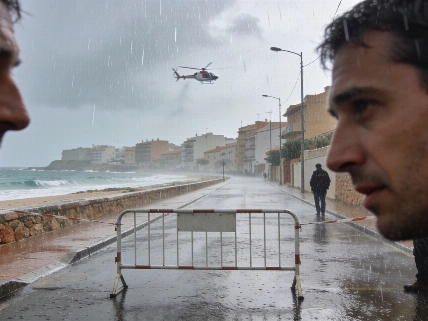
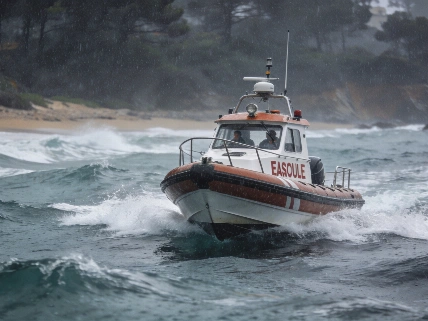
Rescue teams found people trapped in homes and on rooftops, amid flooded streets and rivers that had burst their banks. Around 15 helicopters took part. Bernabé said the rescues by 16:02 included 226 people helped by the Guardia Civil and more than 200 by the UME. The Policía Nacional had helped 25. The Guardia Civil separately reported 95 rescues in the Valencian Community and the evacuation of more than 2,000 people. The Generalitat also mobilised the UME to support regional and municipal emergency services.
Among the individual operations, Policía Nacional officers rescued Teresa, a 93-year-old woman trapped in her Gandia home, where water stood more than a metre and a half deep. They used a stand-up paddleboard. In Alicante province, firefighters focused their work on Pego, Els Poblets and El Verger, while crews searched vehicles in Pego for anyone who might be trapped. A separate police operation in Ceuta concerned the clearance of migrant settlements and was unrelated to the flood response.
At 15:39, regional conseller Juan Carlos Valderrama reported 1,513 incidents: 1,031 in Valencia and 468 in Alicante. Castellón accounted for 14. Oliva opened a pavilion with capacity for 150 people; 48 people had spent the night in shelters.
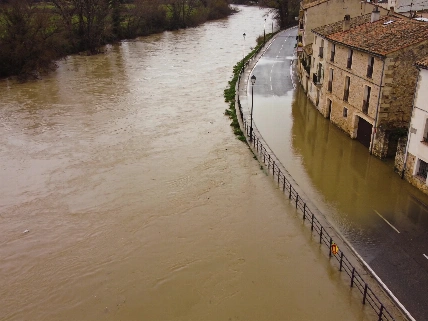
River levels were beginning to stabilise as the rain eased, but the Confederación Hidrográfica del Júcar warned of continuing flood risk. The Vernissa at Rótova had fallen to the orange threshold, while the Serpis at Font d’en Carrós remained at yellow. The Girona and Vaca were receding after overflowing in some places.
The storm also disrupted air travel in Palma and Ibiza, causing two cancellations and 16 diversions; delays were numerous as well. Ibiza recorded 173.8 millimetres of rain in 24 hours, a station record dating back at least to 1944. Across Spain, 27 roads were closed by flooding, and more than 100,000 pupils missed school: 80,913 in Valencia and 21,868 in Alicante.
Aemet said the Safor area had only one comparable precedent in its climate record: the storm of 3 November 1987. Rain was moving towards Catalonia, where Protección Civil had not ruled out raising the alert to red and recommending that people avoid travel. Aemet forecast further showers in northern Catalonia and Menorca on Tuesday, followed by more stable weather across much of Spain. Renfe offered free changes and cancellations and warned of possible disruption from rain and thunderstorms, as well as wind.