A parliamentary inquiry questions the Interior Ministry’s response to self-styled patrols in Valencia. The groups, accused of intimidating immigrants, operate in the Malva-rosa area. Their presence raises concerns about public safety and police oversight.
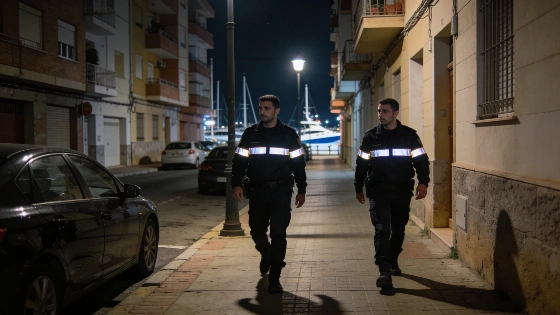
Alberto Ibáñez, a deputy from Compromís-Sumar, has formally questioned the Spanish government over the activities of so-called 'fascist squads' operating in Valencia’s maritime district. The parliamentary inquiry, submitted to the Congress of Deputies, highlights the presence of groups like the self-named Ángeles de la noche, who patrol neighborhoods such as Malva-rosa dressed in dark clothing and reflective bands. These patrols, according to Ibáñez, present themselves as local residents concerned with security but are in fact organized groups accused of intimidating immigrants, particularly those of Arab origin.
The initiative points to a pattern where these groups, whose attire closely resembles official uniforms, attempt to stoke fears of rising insecurity among residents and passersby. The document criticizes what it describes as the impunity with which these squads operate, contrasting it with the swift police response seen during recent education protests and union actions in the Valencian Community. Ibáñez’s inquiry specifically asks the Ministry of the Interior what measures are being taken to prevent the activities of such violent groups and whether undercover agents from the State Security Forces (FCSE) are monitoring these organizations or their supporters, especially those promoting hate speech or civil unrest.
Further, the parliamentary question challenges the apparent tolerance shown by police towards these patrols, especially given that their actions, according to the inquiry, undermine the credibility of the FCSE itself. Ibáñez also seeks clarification on whether any sanctions have been imposed on these groups. Notably, the area where the Ángeles de la noche operate has seen a 22% decrease in minor crimes, a statistic cited in the parliamentary document. However, the existence of these squads, the inquiry argues, raises fundamental questions about the state’s approach to justice and the use of force in a democratic society, suggesting that such patrols risk creating a parallel system of justice outside institutional oversight.
The deputy’s submission calls on the Interior Ministry and regional government delegations to ensure equal enforcement of the law and to advance the democratization of institutional practices. Ibáñez notes that media reports have cited the absence of illegal acts as a reason for not intervening, but he contends that the organized and intimidating nature of these patrols inherently threatens public order and safety. The initiative also references Article 36.14 of the Organic Law on Citizen Security, which classifies the use of uniforms that could be mistaken for those of the FCSE as a serious offense.
Similar tensions between local authorities and security forces have surfaced elsewhere in Spain, as seen when Catalan parties demanded explanations after police actions at a football match in Elche, a situation detailed in this related report. Such incidents underscore ongoing debates about the boundaries of citizen action, police authority, and the protection of civil rights in public spaces.
In the broader context, Spain’s legal framework places responsibility for public order and security squarely with official law enforcement agencies. Unauthorized patrols or groups imitating police functions are subject to legal scrutiny, especially when their activities intersect with issues of discrimination or public intimidation. The current debate in Valencia reflects wider national concerns about the rise of vigilante groups and the challenges they pose to democratic oversight and social cohesion.