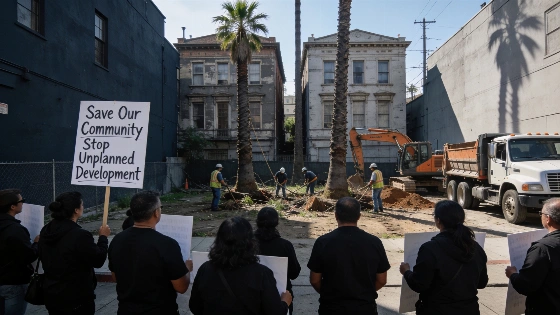
Dozens gathered in El Botànic, Valencia, after palm trees were removed to make way for an 80-room hotel. Residents and local politicians warn of the loss of neighborhood identity as tourist accommodations expand.
In Valencia's El Botànic neighborhood, tensions escalated this week as residents protested the removal of several decades-old palm trees from the courtyard of two buildings on Calle Túria. The trees were cut down with municipal approval to clear space for an 80-room hotel, intensifying local concerns about the rapid transformation of the area due to tourism development.
The demonstration drew dozens of neighbors and business owners, many dressed in black to symbolize mourning for the loss of both the trees and the community's character. Protesters displayed signs reading “El Botànico en lucha” and “El Botànico no se vende,” highlighting their frustration with the ongoing conversion of residential properties into tourist accommodations. The event was supported by representatives from Compromís and the PSPV, who joined calls to protect the neighborhood from further gentrification.
According to residents, the two buildings at numbers 49 and 51 on Calle Túria were previously home to 16 families, a nursery school, and a vegetarian restaurant. In 2021, after a French investment fund acquired the properties, tenants were gradually forced to leave as their leases expired. The new owners secured municipal permits to redevelop the site into a hotel, and the recent removal of the palm trees marked the start of construction preparations.
Local activists argue that the surge in tourist apartments and hotels is displacing long-term residents and undermining small businesses, except those catering to visitors. They point to several new tourism projects planned for Calle Túria and nearby streets, warning that the trend is spreading beyond Valencia's historic center. Despite assurances from city officials that the ratio of tourist accommodations remains within limits, residents say the reality on the ground tells a different story.
Political figures present at the protest criticized the current city administration for declining to exercise its right of first refusal to purchase the buildings for residential use. They argue that this decision allowed the investment fund to proceed with its hotel plans, accelerating the neighborhood's transformation. Residents also lament the loss of the mature palm trees, which had been a fixture of the courtyard for decades and, according to city authorities, could not be transplanted elsewhere.
Longtime locals report that the demographic makeup of El Botànic is changing rapidly, with fewer permanent residents and more short-term visitors. Some note that the number of hotel buildings on Calle Túria has increased, further altering the area's atmosphere. Efforts by residents to report suspected illegal tourist apartments to the district council have yielded little response, fueling a sense of frustration and abandonment.
Valencia, like many Spanish cities, has faced mounting pressure from tourism in recent years, leading to debates over housing affordability, neighborhood identity, and the balance between economic development and community needs. Municipalities across Spain have introduced various measures to regulate tourist accommodations, but enforcement and effectiveness vary widely. The situation in El Botànic reflects broader challenges as cities seek to manage growth while preserving local character and quality of life.