Political tension rises in Valencia as opposition parties demand full disclosure of President Juanfran Pérez Llorca’s World Cup trip expenses. The PP insists no public funds were used. The Football Federation confirms it provided the costly ticket.
Valencia’s political scene is under scrutiny after President Juanfran Pérez Llorca’s recent trip to the World Cup final in New Jersey. Opposition parties in Les Corts Valencianes, including PSPV-PSOE and Compromís, are pressing for detailed documentation of the journey’s costs, questioning whether public resources were involved despite official denials.
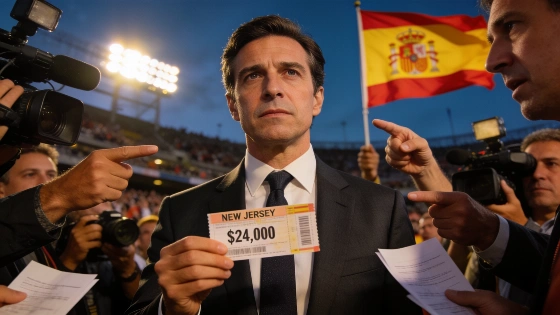
The controversy centers on the nature of the trip. While the Partido Popular (PP) maintains that Llorca traveled in a private capacity and personally covered all expenses except the match ticket, the opposition argues that the invitation from the Spanish Football Federation was extended due to his role as president. This, they claim, blurs the line between personal and official business, especially given the high value of the ticket, reportedly worth $24,000.
Llorca departed for the United States on Friday and returned to the Valencian Community on Monday, accompanied by his secretary for communication, Vicente Ordaz. Both men received invitations to the final from the Federation after expressing interest in purchasing tickets. The Federation clarified that such invitations were also offered to other public figures, regardless of political affiliation, as part of its standard practice as a FIFA-affiliated private organization.
Opposition leaders have intensified their demands for transparency. PSPV spokesperson José Muñoz highlighted what he sees as a contradiction: Llorca claims the trip was personal and self-funded, yet the ticket was provided institutionally. Muñoz also noted that Llorca was the only regional president present at the final, accompanied by Ordaz and Alicante provincial deputy Bernabé Cano, raising further questions about the trip’s organization and funding. Compromís spokesperson Joan Baldoví announced plans to formally request all invoices related to the journey, expressing concern over possible undisclosed sponsorships or conflicts of interest, though no evidence has been presented to support such claims.
In response, Vicente Ordaz stated that he personally paid for his travel and accommodation, emphasizing that no company linked to him or his family contributed financially. He also reserved the right to take legal action against what he described as false allegations regarding the funding of his trip.
PP spokesperson Fernando Pastor defended the president, insisting that the trip and ticket cost Valencian taxpayers nothing. He contrasted this with previous instances where public officials spent thousands of euros on sports or cultural events. Pastor dismissed speculation about third-party payments, reiterating that no public funds were used and that he had no access to Llorca’s personal financial transactions.
Meanwhile, Vox’s parliamentary leader, José María Llanos, used the occasion to comment on unrelated policy priorities, hoping that Llorca’s time in New York would inspire progress on regional legislative initiatives.
The debate over the use of public resources for official travel is not new in Spain. Similar scrutiny has accompanied high-profile trips by national leaders, such as Pedro Sánchez’s diplomatic missions, which have also drawn public attention and media coverage. For example, recent coverage of Sánchez’s efforts to restore ties with Algeria and secure energy deals has highlighted the ongoing tension between official duties and public accountability, as seen in this report on diplomatic negotiations.
As the Generalitat prepares to approve its budget with Vox’s support, the outcome of the opposition’s demands for transparency could set a precedent for how similar cases are handled in the future. The issue underscores the persistent challenge of distinguishing between personal and official activities for public officials, especially when high-value invitations and international events are involved.
For context, the Spanish Football Federation routinely invites a range of personalities to major matches, including politicians and journalists, as part of its engagement strategy. However, the high cost and exclusivity of World Cup final tickets have amplified calls for clear documentation and accountability. The situation remains fluid as opposition parties continue to seek answers and consider legal action if irregularities are found.