Thirteen administrative fines have been issued after protests in Valencia. Most penalties target teachers, with unions now offering legal aid. The crackdown follows recent reforms on classroom debate.
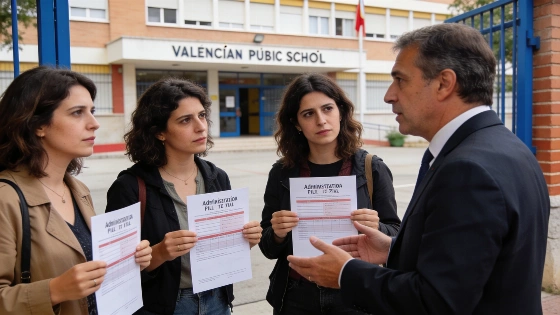
Thirteen administrative fines totaling €8,000 have been imposed on teachers and unions in the Valencian Community following recent protests in defense of public education. The Coordinadora d’Assemblees Docents del País Valencià (CADPV) confirmed that 11 teachers and one union have received sanctions linked to their participation in strikes and demonstrations. The organization denounced what it describes as a pattern of repression against educators who have opposed policies from the regional Education Department and the Valencian government.
According to CADPV, all fines are directly related to actions during the strike, including participation in authorized gatherings and informational pickets. The group argues that these penalties target those who exercised their rights to assembly, protest, and strike in a peaceful manner. In response, unions have mobilized legal teams to support those affected, emphasizing the importance of collective action and solidarity. The Coordinadora urges any sanctioned teacher to seek legal advice before making decisions about payment or appeals, highlighting that no one should face these consequences alone.
CADPV also criticized recent legislative changes introduced by the Generalitat, which they claim expand surveillance and control over classroom discussions. The reforms, embedded in the regional budget's accompanying law and modifying Decree 80/2017, are seen by the group as an attempt to restrict what can be discussed or debated in schools. This development has intensified concerns among educators about freedom of expression and academic autonomy in Valencian classrooms.
To address the financial impact of the fines, the Coordinadora announced ongoing fundraising efforts through a resistance fund. These resources are intended to cover penalties if legal challenges are unsuccessful. The organization maintains that the sanctions are a direct response to public and peaceful advocacy for education rights, rather than any unlawful conduct.
Support for the teachers comes amid broader debates about the role of public institutions and the boundaries of protest in Spain. The situation in Valencia echoes other recent cases where government actions have drawn scrutiny, such as the economic impact of major international productions in the region, as highlighted in reports on the transformation of Ciudad de la Luz in Alicante (see coverage of the economic boost from Disney's filming).
Administrative sanctions for protest activity are not new in Spain, but the current wave in Valencia stands out for its focus on the education sector and the scale of legal mobilization in response. The case underscores ongoing tensions between regional authorities and public sector workers, particularly around issues of free speech, labor rights, and the governance of public education. As the legal process unfolds, the outcome may set important precedents for how similar disputes are handled in the future.